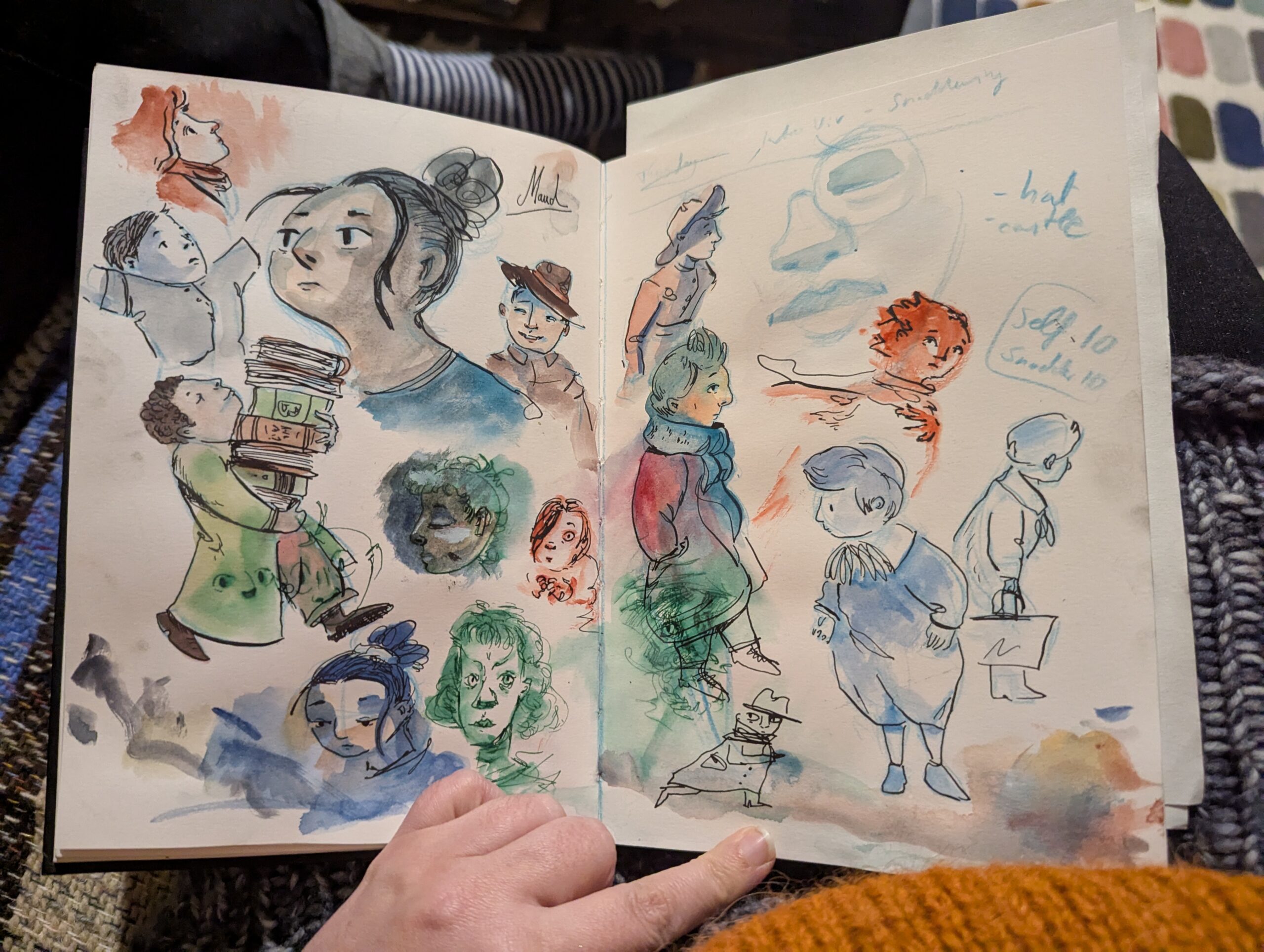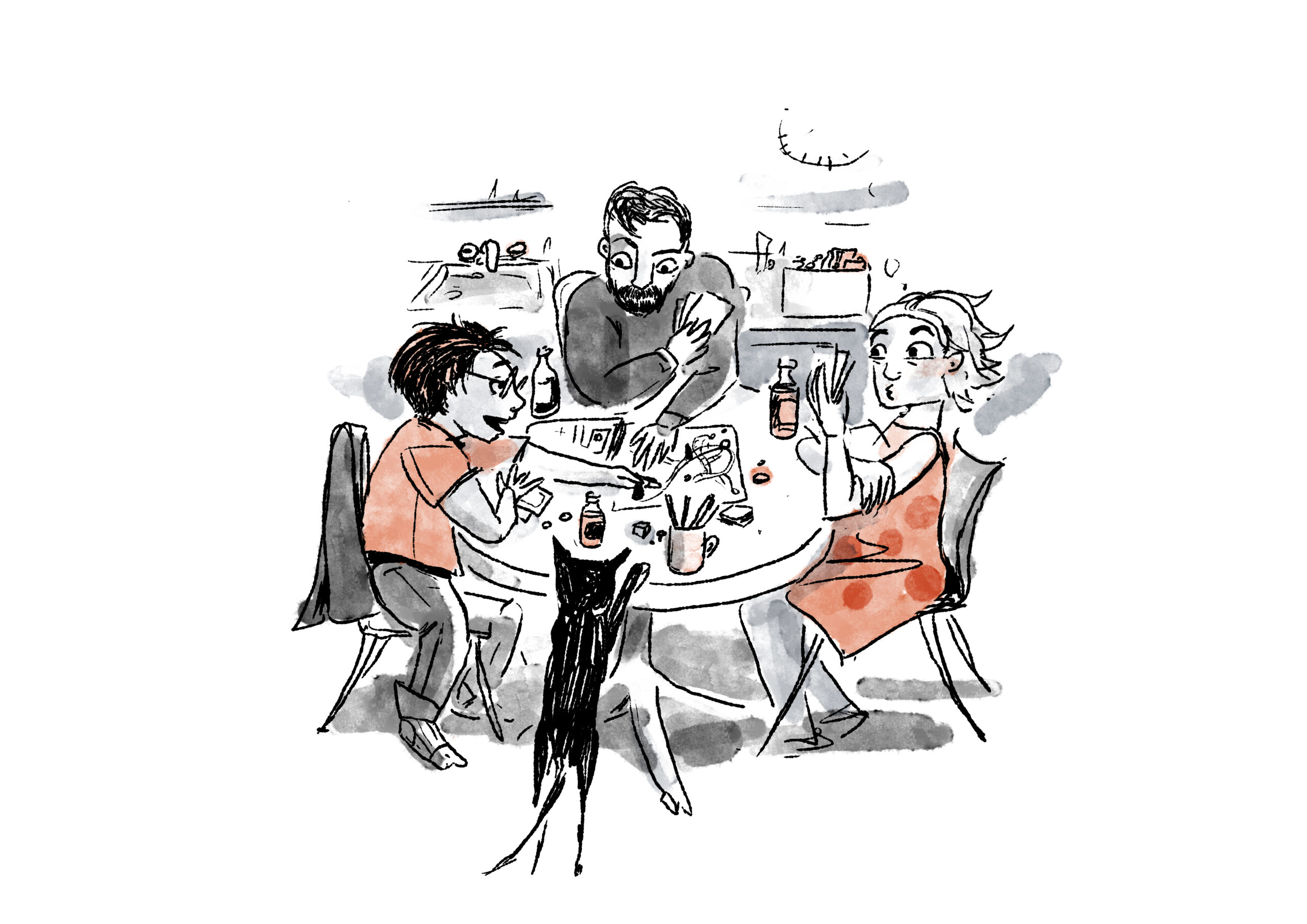
Once a year, I teach a project at uni where illustrations students learn the basics of having a game jam. They start by improvising a board game in groups, and some years we reskin a card game. Then they go on to develop their own games. It’s always great fun.
It’s very easy to take your first steps into making games with your friends. Making them by yourself is harder, simply because you can’t easily try out ideas – and that is the most important part. To make a game, you need to play with it at every stage.
If you’d like an easy project to start, I think one of the best things you can do is reskin an existing game.
Do you have a card game or board game that you really enjoy? Take it and make it yours. You’re allowed! You are not allowed to publish or sell your version, obviously, but you absolutely can make your own version that you play with your friends. I’ve met many people who have memories of such games that their parents made for them when they were kids, personalised little works of art and care and fun that tell their own story.
To reskin a game, first you need to understand that game well enough – you’ve played it, you know how it feels. What is the current there? How is that theme reflected in the gameplay, in the way the game feels? Now change that theme, and see what happens.
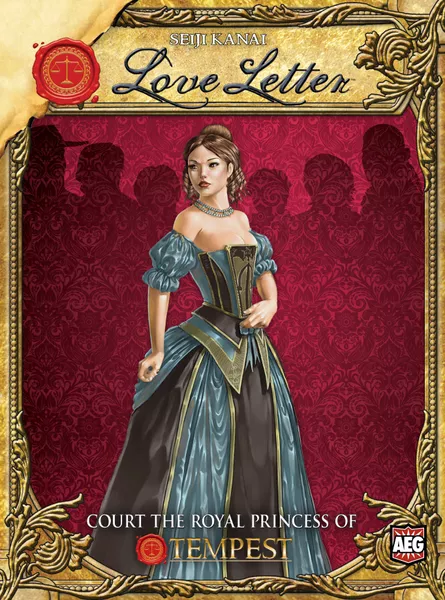
A good starting point is Love Letter – a relatively inexpensive card game, if you don’t own a copy you can easily get one. Every card in it represents a character, and every card has a particular effect that reflects the personality and social status of that character. If you spend a bit of time analysing that, you can easily come up with your own versions (and many people have – you can search for official and inofficial versions). – In the original game, the characters are all members of a court, trying to get to the Princess with great urgency. In game design workshops I’ve seen this game reskinned in amazing ways by students. One version was set on a bus, with the characters being passengers trying to get the last free seat. One was set in a cafe, with only one perfect cake being the great price. Others made it all about their friends, or the university staff. Every game felt unique!
After making up our new versions, we went right on inventing and adding new cards – cards that had effects that suited the theme (a busy kitchen? Add cards that make players shout or have to react quickly!) and characters that suited the setting (how about a restaurant critic?)
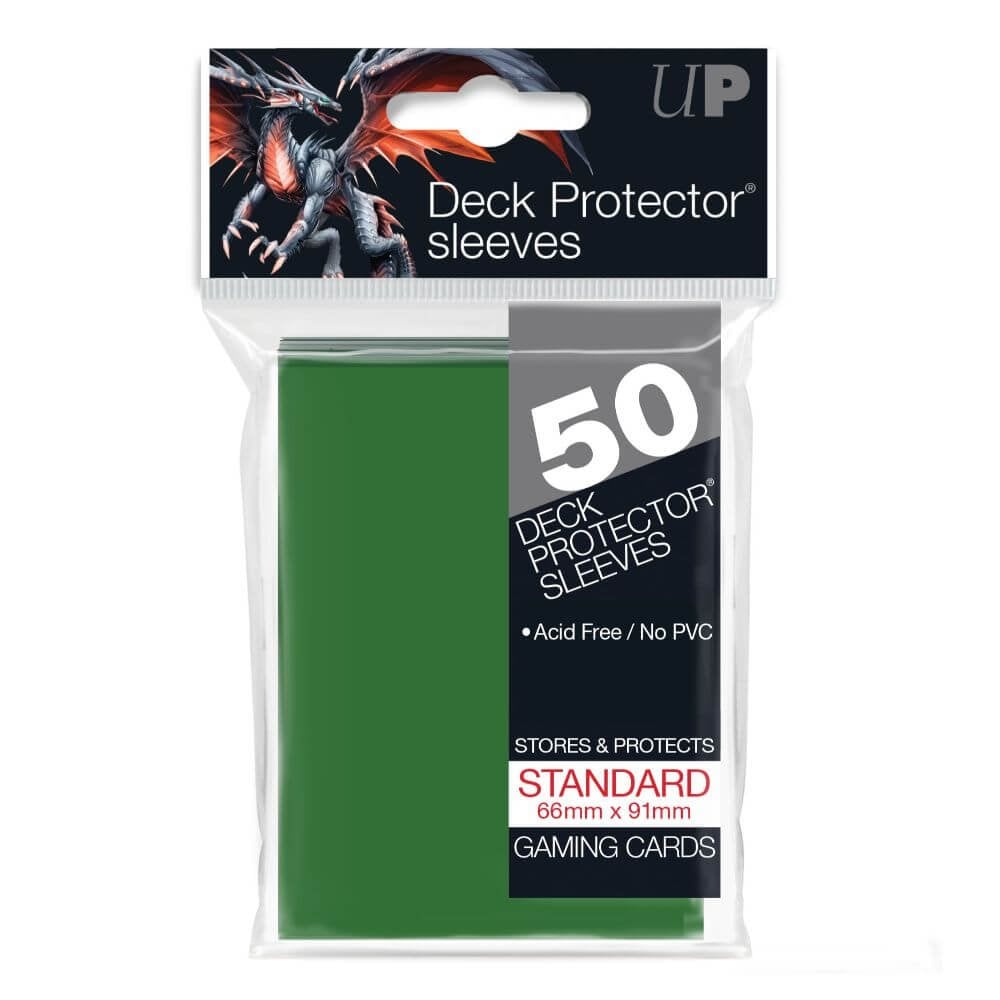
All you need to do this is a copy of the original game, pens and paper. A pack of card sleeves is a really good idea, too – they make it easy to quickly and roughly create cards that all look the same from the back.
Reskinning a game like that is an excellent exercise to introduce yourself to some of the concepts that you need to consider when making your own game – how rules and theme hang together, and how little changes can make a big difference in how a game feels and plays.
If you’d like to quickly make a board game about anything you like, you could try snaddering.
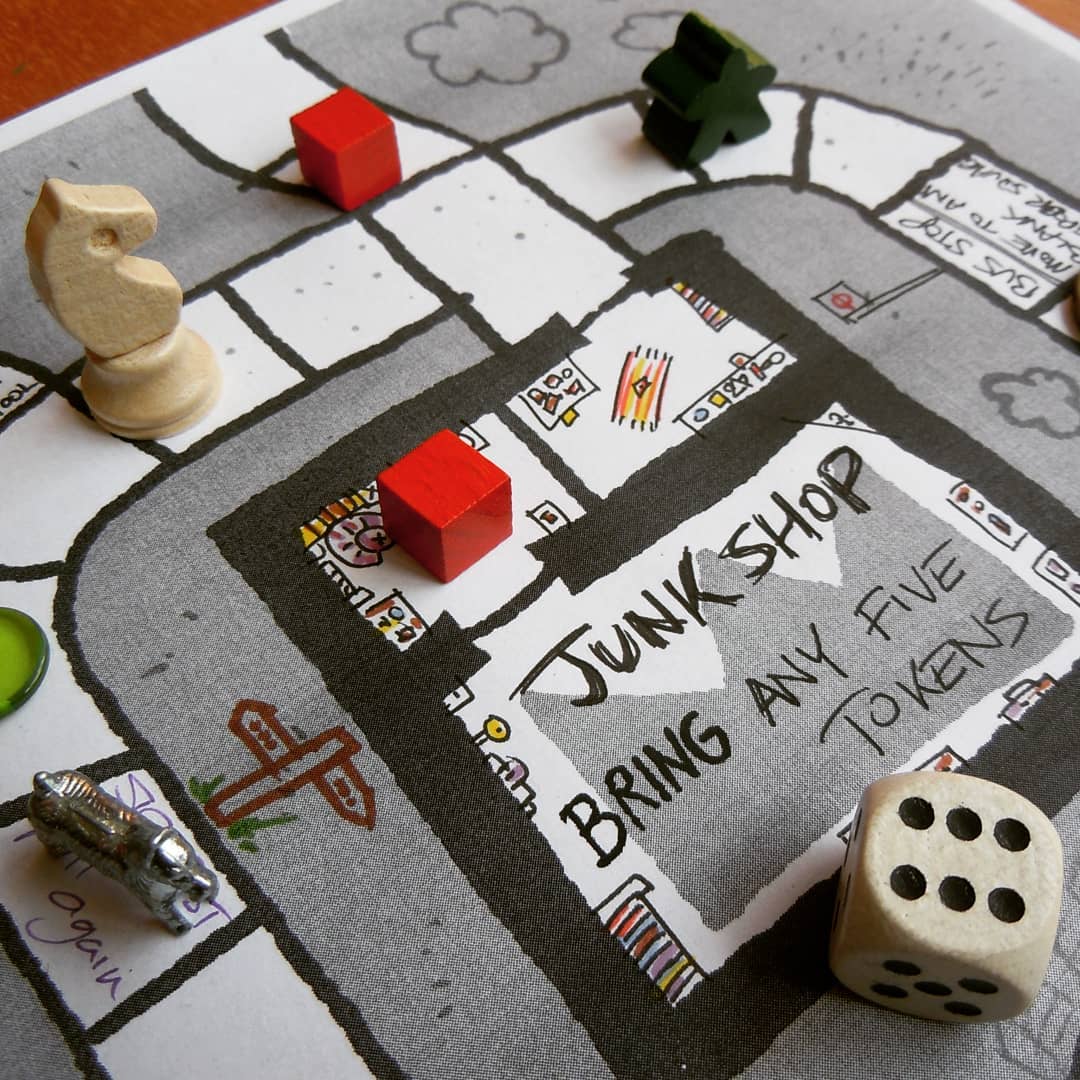
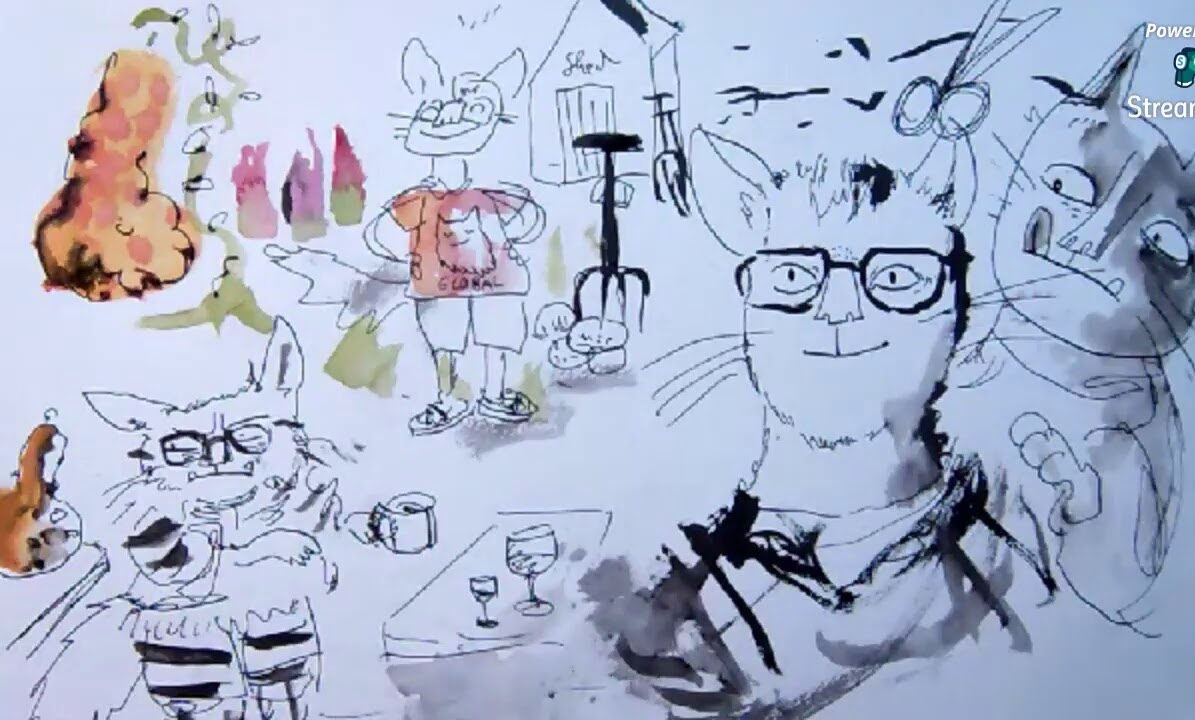
Snaddering is a technique that my friend and frequent collaborator Kevan Davis and I invented years ago, and used a lot ourselves. It is a chaotic but effective collaborative brainstorming session that results in a playable game after about half an hour. It won’t always be a game that you want to play over and over, but it will be yours, and it will be fun. The main concept is that you start with a branching roll-and-move track, choose a theme and a few starter rules, and then throw lots of ideas at it which are written, doodled, scribbled straight onto the board by everyone at the same time. At some point, it will be ready to play right away, and you can see how your ideas interact and play out between you.
The system allows beginners and experienced players/designers to create and play together – in fact, it tends to work even better when the group is varied in their interests, in age, in every conceivable way because their ideas will interact in surprising ways.
Quite often, in snaddering you may discover new game mechanics that you can take and develop independently – things that have nothing to do with the roll-and-move simplicity you started out with.
In any case, it is an excellent warm-up, and an exercise in creating a playable prototype as a team. It will show you how scrappiness and playfulness are importent assets, and how it’s much better to try out ideas than discuss them at length and try to imagine what they might do.
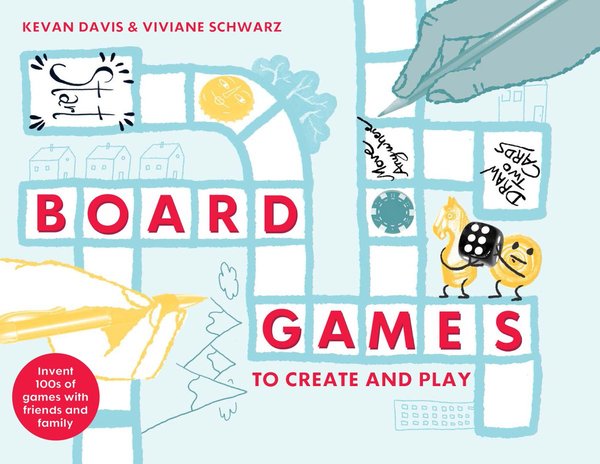
We made a book full of instructions and ready-to-use boards and rules that you can buy if you want to snadder. If you don’t want to, you can still get together, sit around a table with paper and pencils and a box of objects that seem likely useful and just get started making up a game together.
Just remember:
- No one is the boss, if you make up a game together, it is everyone’s game.
- If one of you has an idea of what you want the game to be, save that for later. Instead, allow your group to decide what you want to make, together.
- Don’t discuss what you might as well try out instead.
- Anyone is allowed to say “no” to any interaction without having to explain why – everyone is allowed to stop playing at any point as well.
- Be ready to lose parts of the game as well as making up new ones. It’s useful to sometimes imagine all the things you could add to your game, but also always consider what you could remove.
- Make things scrappily, fast, make them together in the quickest way you can to try them out. Save the beautiful drawings and all that for when you have tested the game enough and know it works.
- Test, and test, and test your game, test every bit of it, test it with other people and watch how they do.
- If your game is really not working, look at all the interactions that happen in it and see if any of them are really good – maybe they could be the basis for a new game.
- Have fun!