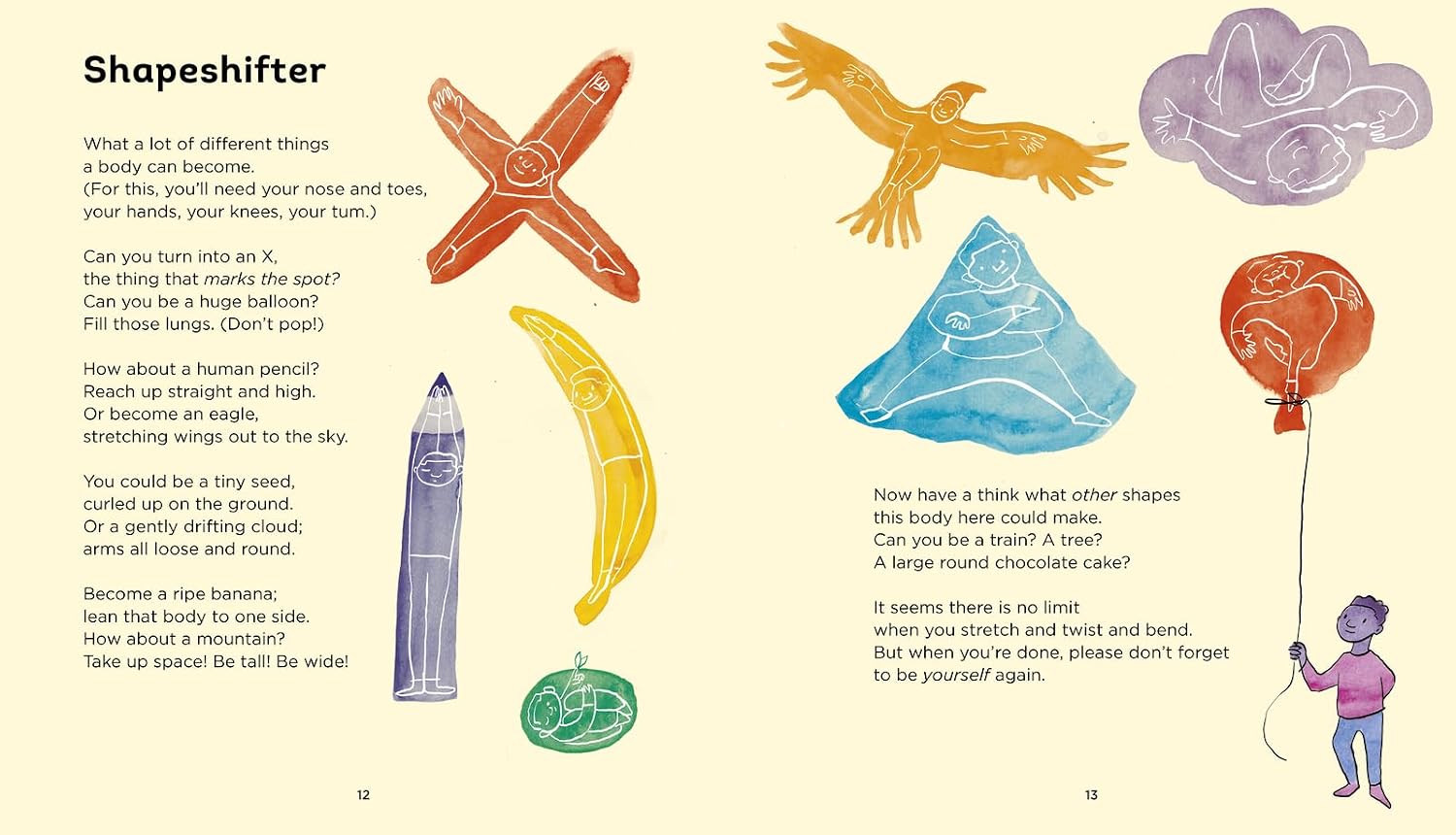
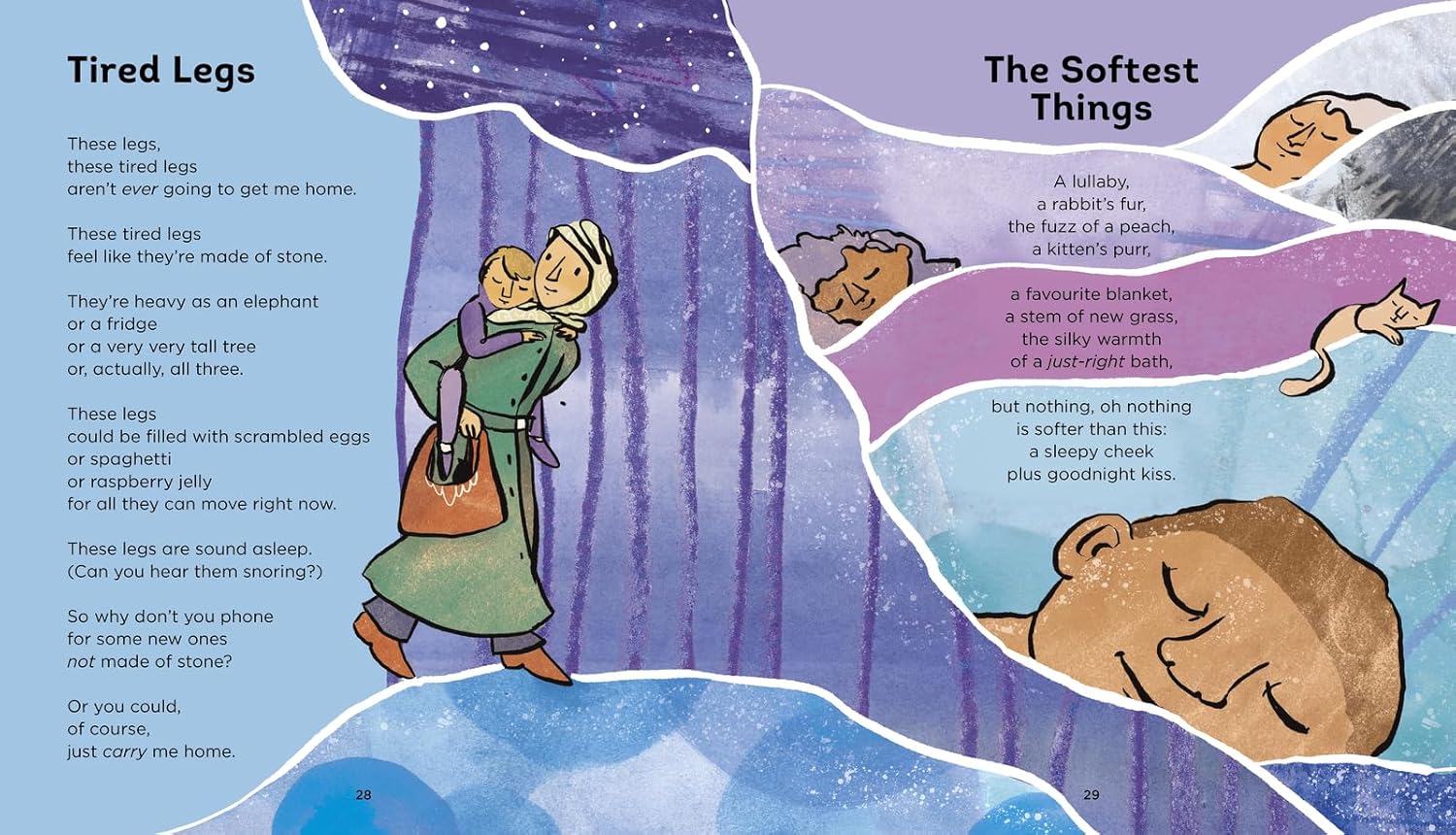
A whole new book of poems just came out, illustrated by me! I am as surprised as you are. It’s been in the works for a good long time, and suddenly IT’S HERE! My part in it has been inking, painting, collaging and most of all marvelling – Kate Wakeling is an incredible poet.
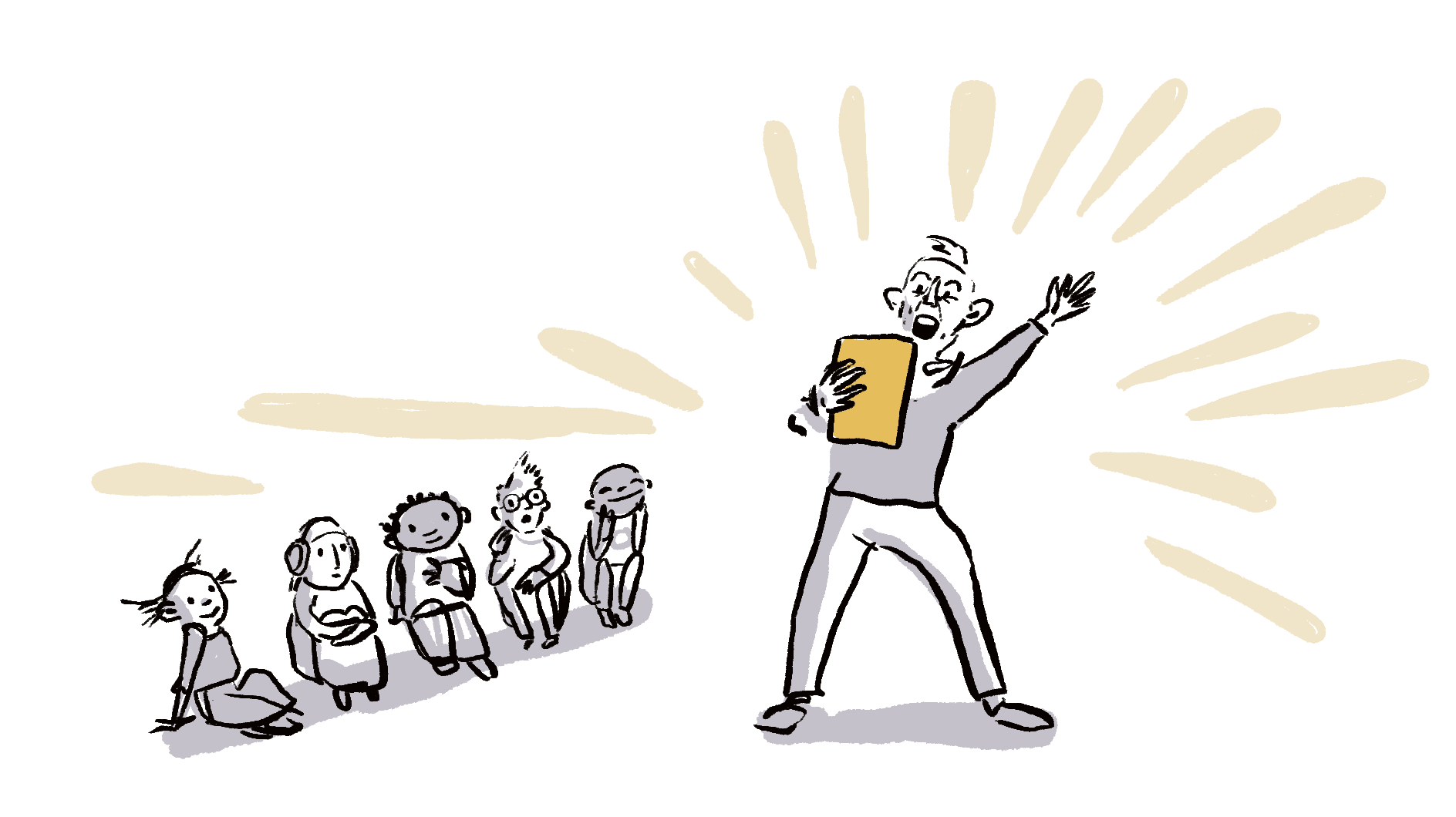
Last week we went to do our first library visit together, and my mind was blown watching her read to the children, and watching the children react to the poems. They were enthralled, literally swept off their feet, turning into soap bubbles, bananas, mountains and back into themselves.
To me, this book is a celebration of autistic joy (speaking for myself – those words are TASTY), but really it is for everyone – three years old and older – appealing to all senses, presenting the wonder of everyday things in a way you can feel right as you read them, evoking memories of rainy days, blanket dens, lively debates of what animal is the fastest (but what if they took the bus?) – it’s a book stuffed with life in the best way.
It’s out now, published by Otter Barry Books. Get it wherever you like to buy your books, and share it with all your small people, librarians, teachers, parents and lovers of poetry.
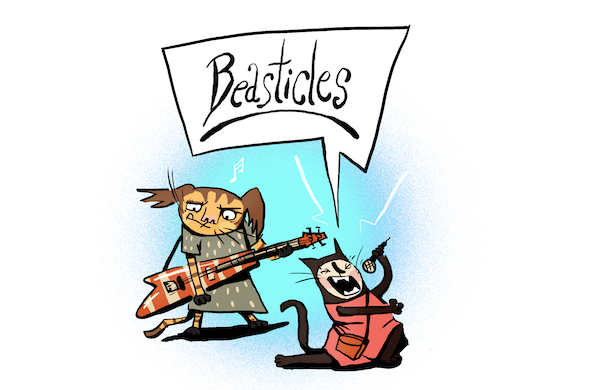
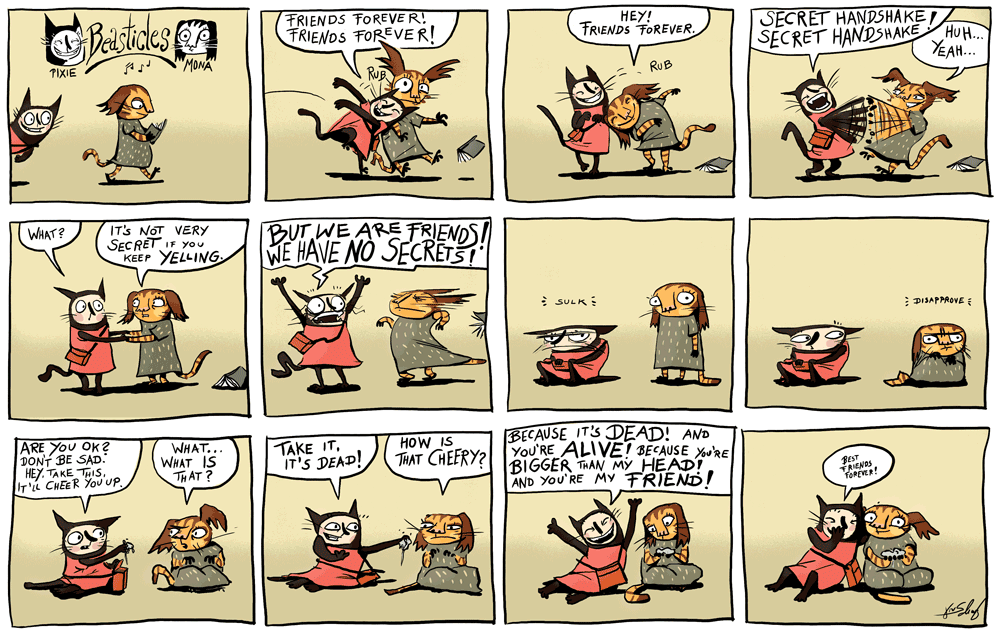
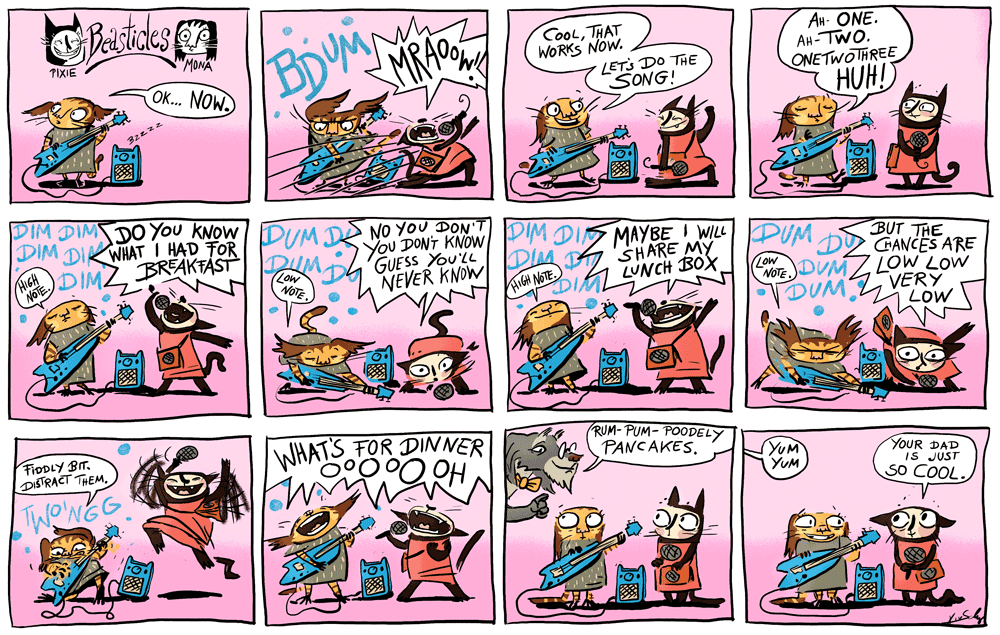
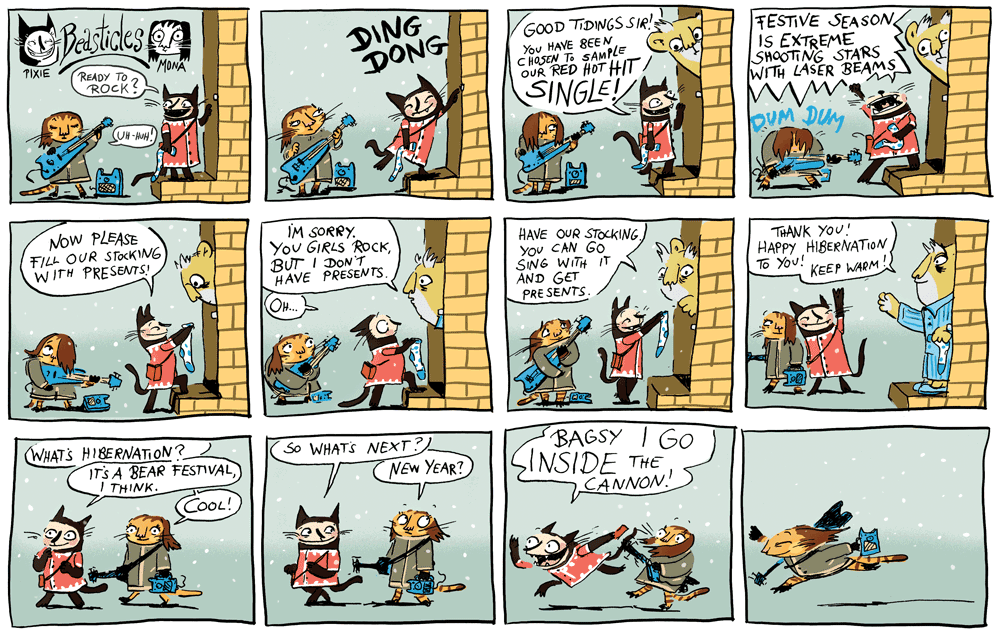
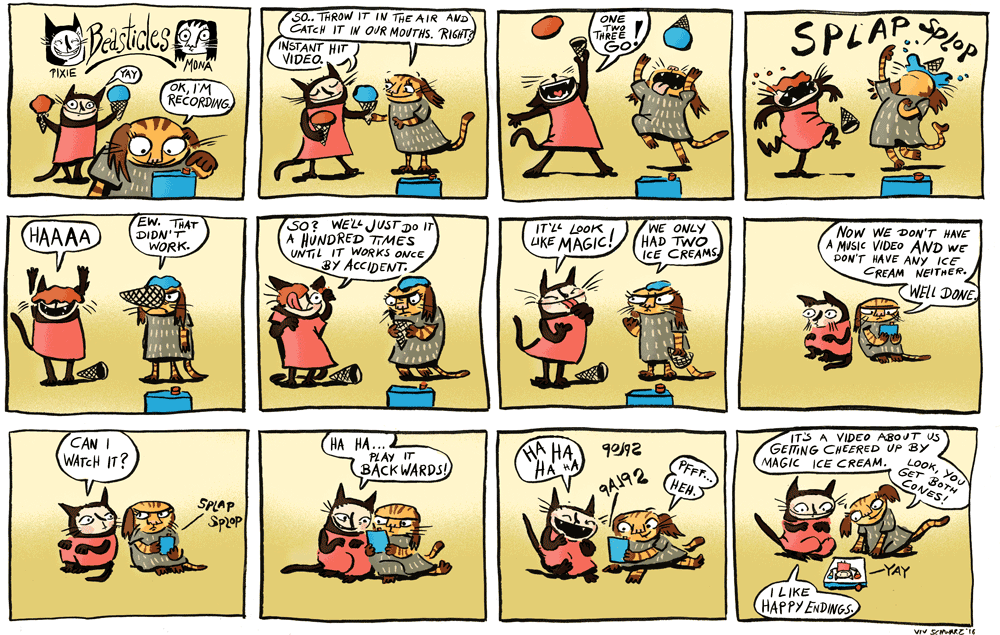
Just for fun, I feel like re-posting one of my old comics for children, BEASTICLES. It’s about a two-kid band of Mona the tiger-dog and Pixie the cat. It was originally poblished in Moose Kid Comics and turned up in the Phoenix at some point, too. I think my favourite bit is still Mona’s portable amp.
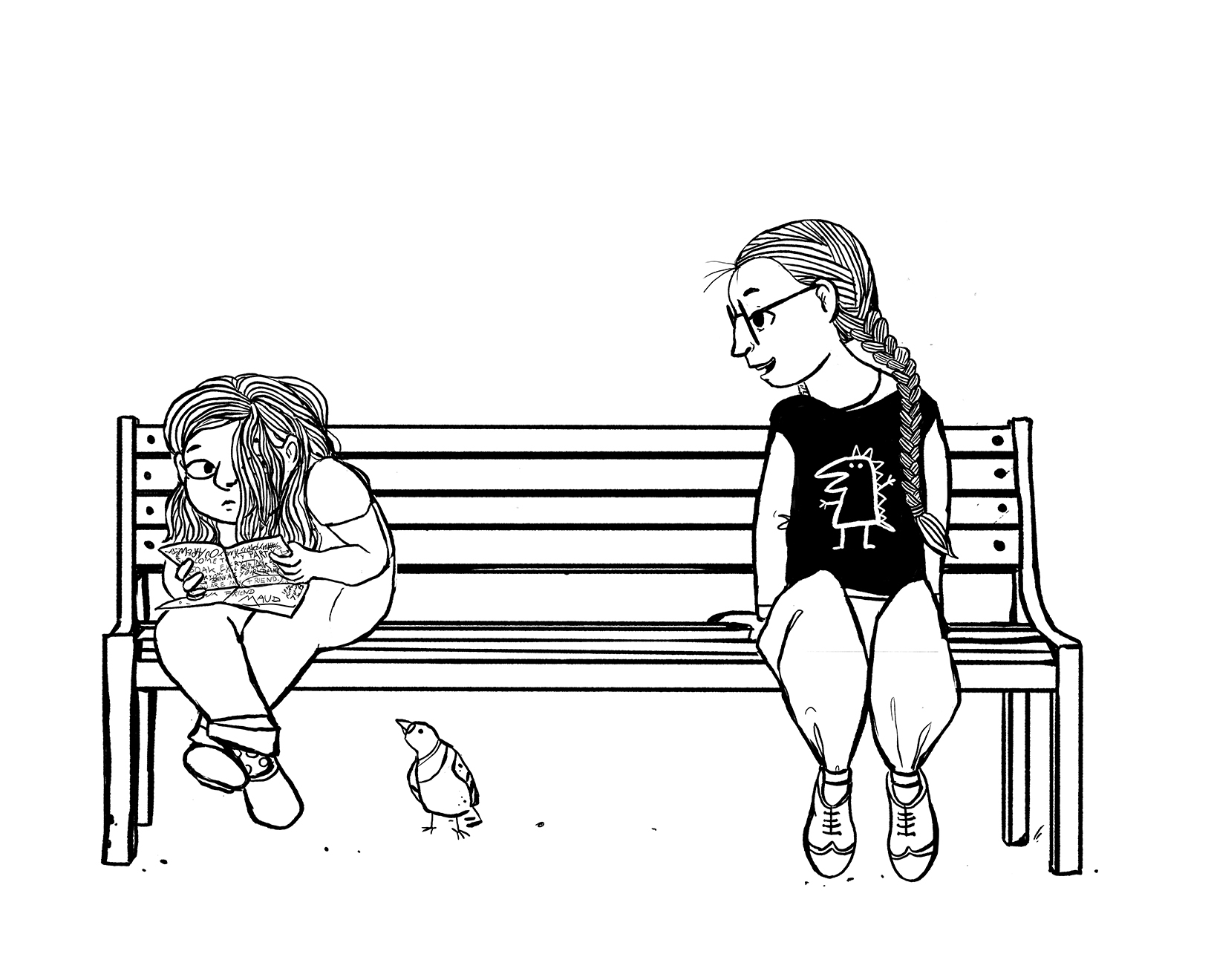
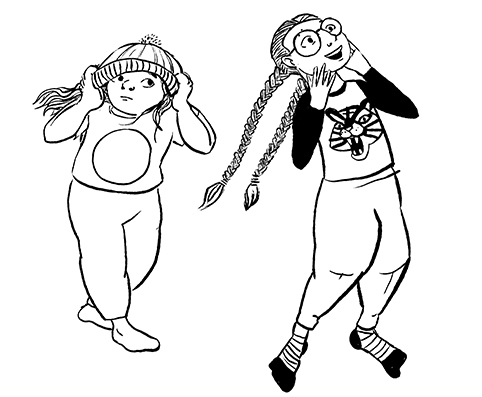
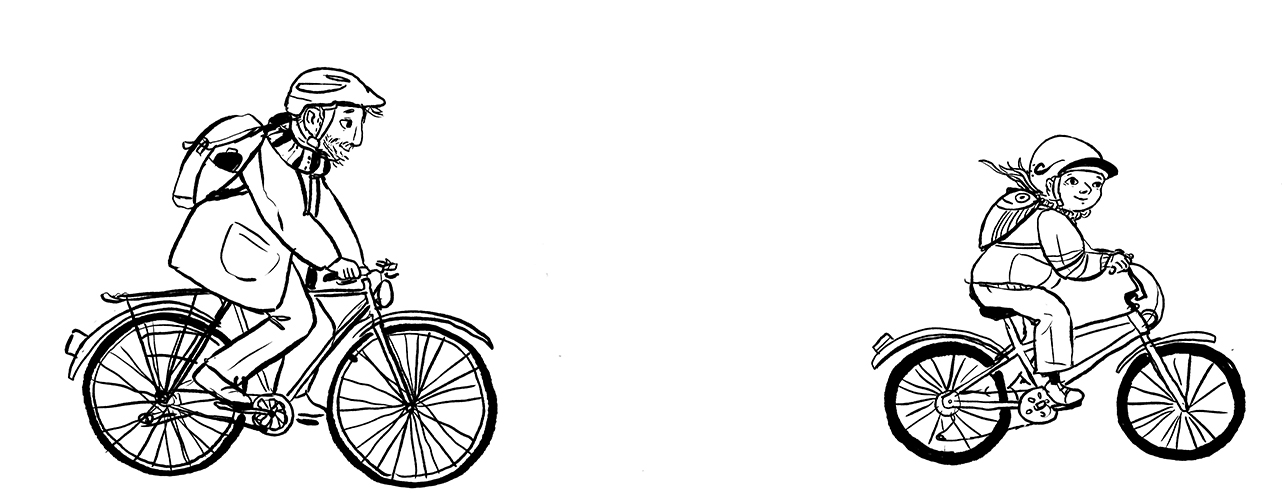
Here are Maud and Gitta! They are the heroes of my first chapter book, which is launching today.
This is, naturally, a new experience. I’m sitting at my desk, sipping tea, wondering how I feel. I can’t tell you.
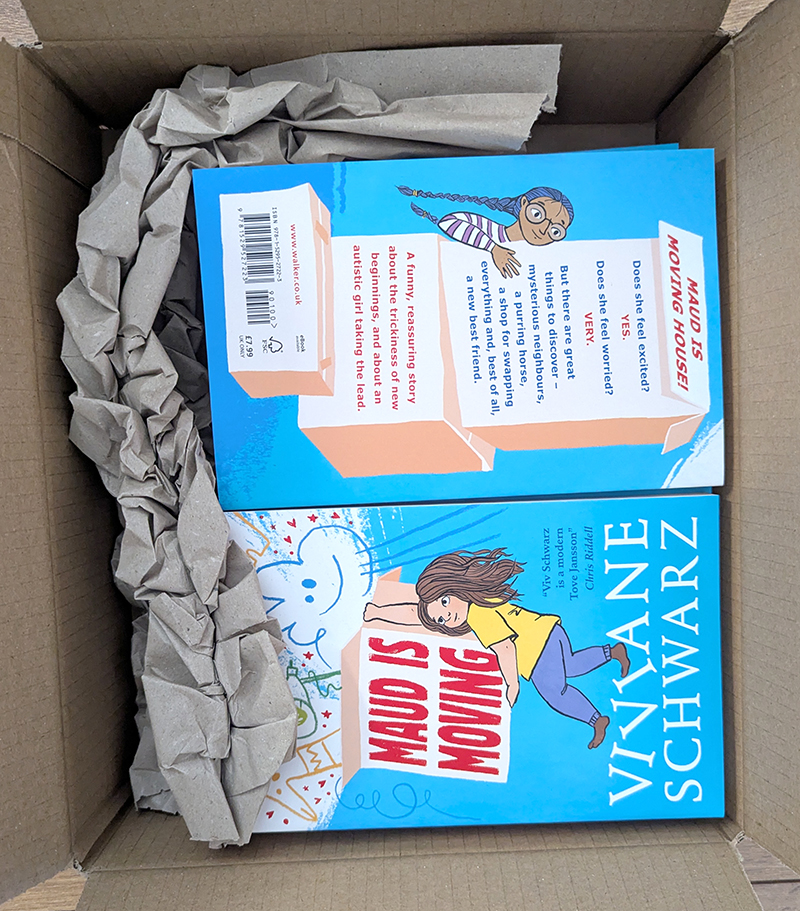
This morning I opened a box: ten copies of the book, ready to take to the launch celebration tomorrow, as presents for friends who supported it all along the way.
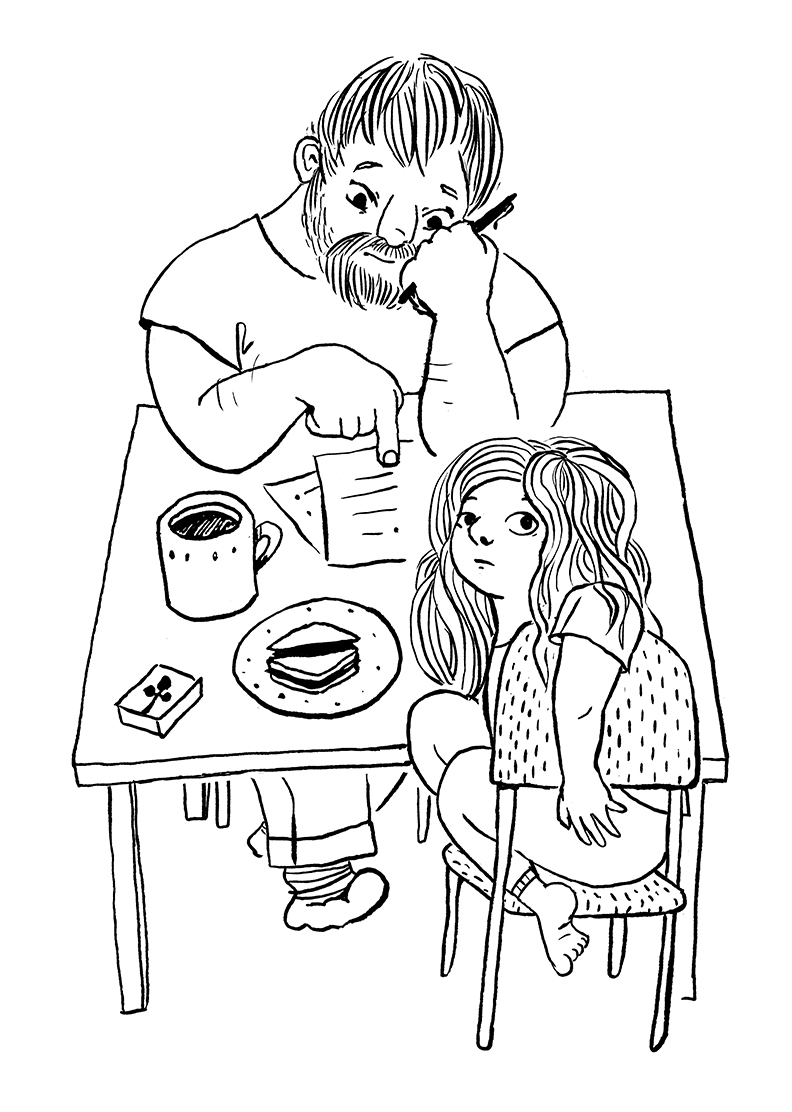
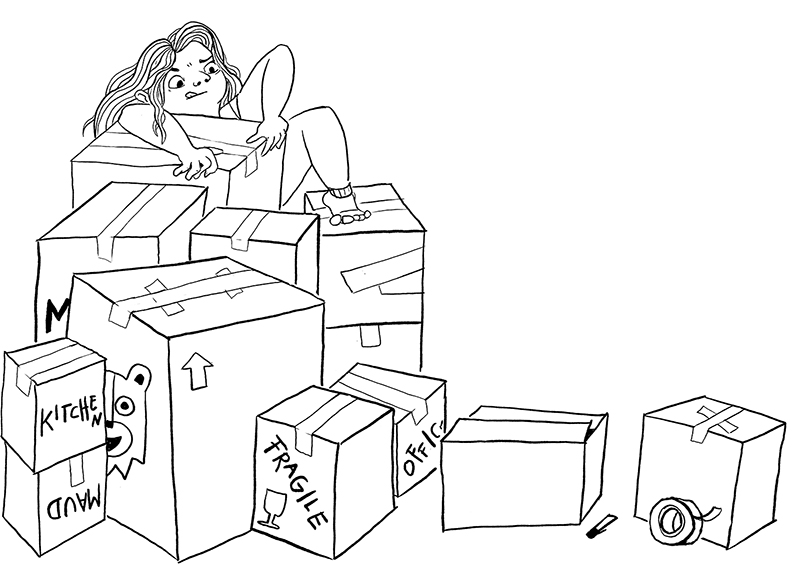
I can tell you how Maud feels in this picture, right at the beginning of the first story. She’s feeling not all that sure about the future. Everything is packed up in removal boxes, which is a strange thing to be happening to one’s life, when you think about it. Maud is thinking about it A LOT.
It’s a book about moving. Moving house, but also moving along in life, and finding your way to move in this world. It started as a collection of short stories about a character who was loosely based on myself as a child. I had been collecting them for some time.
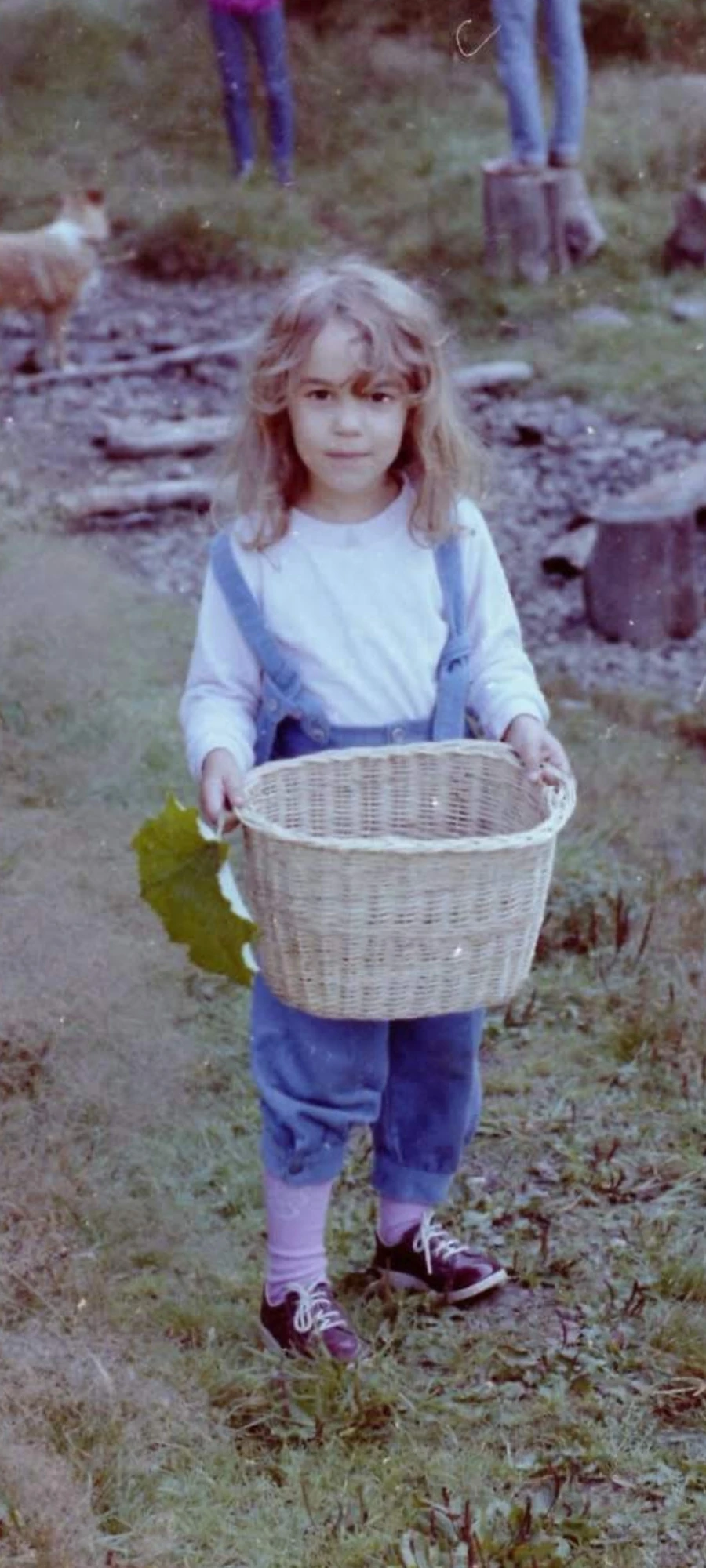
Let’s go back to a time between that Viv there and this Viv here now.
The first time someone asked me to write a novel for children I was sixteen years old. The publisher was one of the big German ones. I loved their books. I had been writing and drawing small comics for them for years already. It was a dream job – and I could not do it. They wanted me to write a little adventure book about everyday experiences. I tried to explain that I simply did not understand those. It all ended in quiet disappointment.
Years later, I went to New York and met with a literary agent. She read one of my novel drafts and said it was really interesting to have a character who was “neurodivergent”. I was baffled, and kept writing, and it didn’t go anywhere. I wrote more, but the persistent feedback for all my longer texts was that the characters were “not relatable”. I thought they were… just perfectly normal people.
So I wrote and illustrated picture books instead and kept my longer stories to myself.
Then – not that long ago at all – something changed.
People started to agree that it might be perfectly normal to be neurodivergent, in the sense that there are really a lot more of us than anyone had thought, and that our stories need not all be centered around suffering – they could, for example, be a little adventure book about everyday experiences.
Like moving house.
Maud is moving house, and every chapter represents one of the big things that (in my experience) happen along the way, usually. There’s a bit of magic realism in all of them, because my favourite childhood stories were told in that mode (many of them Czech). They made me feel like the profoundly puzzling nature of everyday things was something you could accept and deal with.
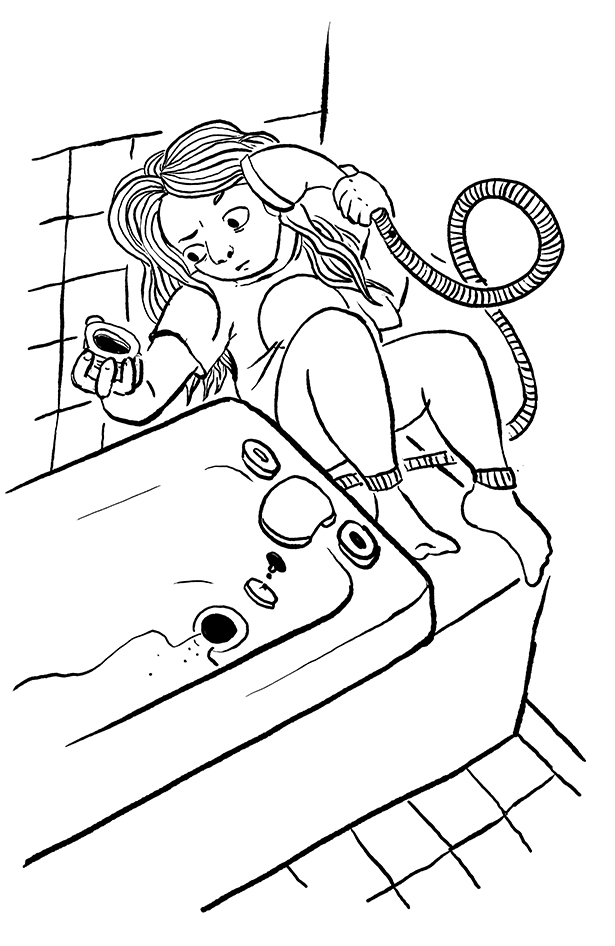
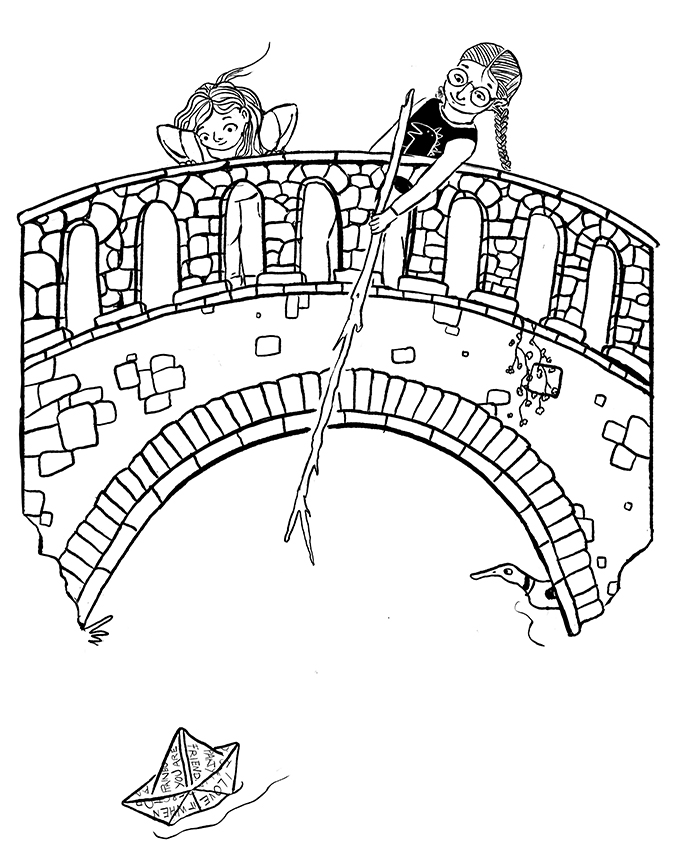
Maud is practical as she confronts the challenges of moving. When the new flat turns out to be haunted, she sorts it out via a phone call through the shower. When she discovers that the local playground is the secret Court of Cats, she demands an audience. She takes her space and makes connections. And, most importantly, she finds a friend who really gets her. She realises that she is someone who can be that friend to others. And however strange things get, the really strange thing would be a world that does not have friends for Maud.
I read the stories out as I was writing them to my friend Chris at our weekly online doodle meetings during lockdown. Later, I met up with my friend Ricky to edit them in a bar in Brixton, where he read them out and we cried laughing (I had entirely forgotten half the jokes along with most of that time, like a lot of people, I guess). He read them to his kids, who gave important feedback. – The book was taken on by Walker Books UK. It was the last one that my long-time art director Ben Norland worked on with me before he retired. The editing was light, to my surprise people said they could relate to Maud perfectly well as it was, even when she invites the rain to her birthday party, and when she forgets to unpack her feelings in the new house, and when she uses up an entire pencil on drawing an entire real horse.
Pauliina Malinen and Marty Cleary helped me get everything in shape beautifully.
We are all going to meet in the pub tomorrow, along with a few more friends, and I’m planning to cover the table in paper so everyone can draw beautiful horses if they wish. Or play cards. Or have a pint. Probably all of that. – I hope some of you go read the book. And that you get it. Or maybe, even, that it gets you.
There’s space in the back to draw your own beautiful horses (maybe not in the library copy – I would approve, actually, but it’s not the done thing, even though lots of their books have spare pages in the back that would be really interesting to make use of… in my childhood library that’s where people left reviews, and they ended up sticking in extra pages sometimes).
Where was I?
Oh yes, at my desk. With a box of books. It’s very strange to have that much of my life all packed up in a box.
I think I’m happy!
Maud is Movingis out now and available wherever you like to buy your books!
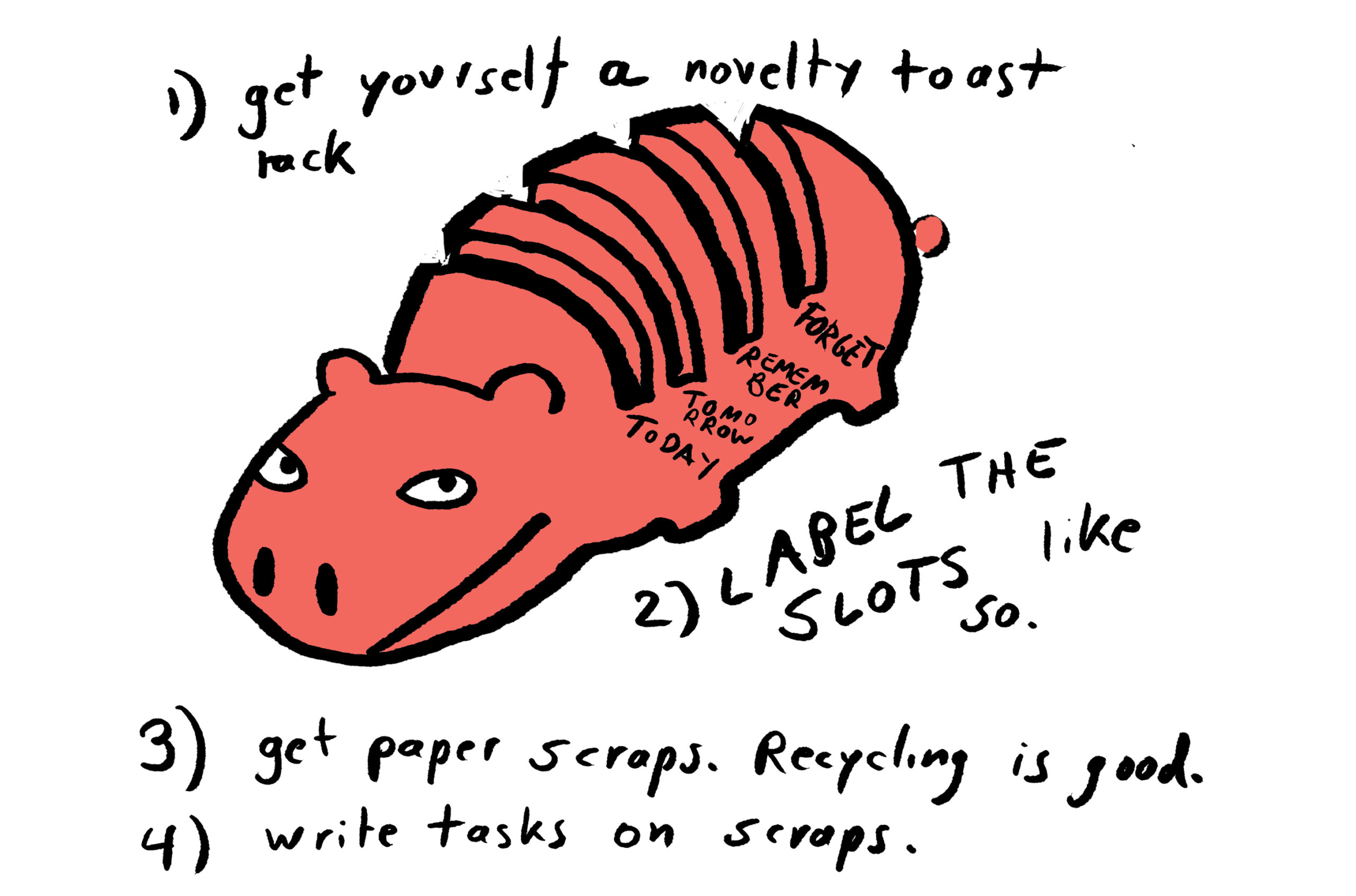
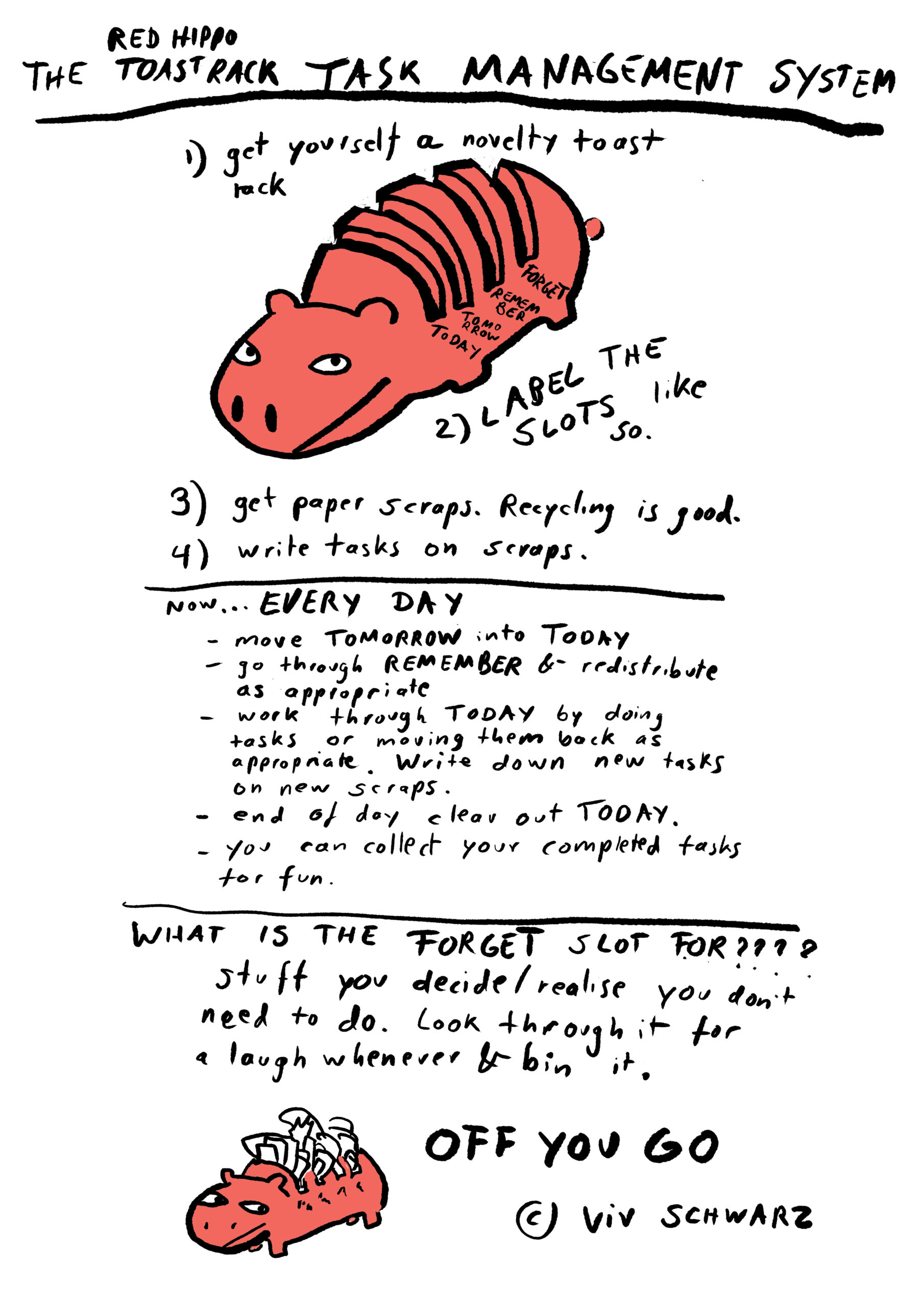
Here’s the fully analogue, organic intelligence task organiser I started using about 25 years ago.
To answer any possible remaining questions: I got the red hippo toast rack at a car boot sale. I would still be using it if the desk in my shoddy rented flat had not collapsed one day due to having no screws in at all, causing injury to my knee and destruction to the hippo. Some English people assumed I was unaware of the actual purpose of a toast rack but you can’t spend your life explaining yourself. – And yes, if your toast rack has more slots you can have one labelled SOON, or whatever.
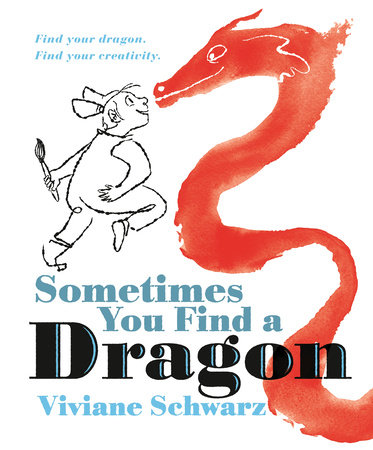
It’s about art – in particular, YOUR ART. The art that you’re already making, whoever you are.
It’s about noticing it, and about what happens next.
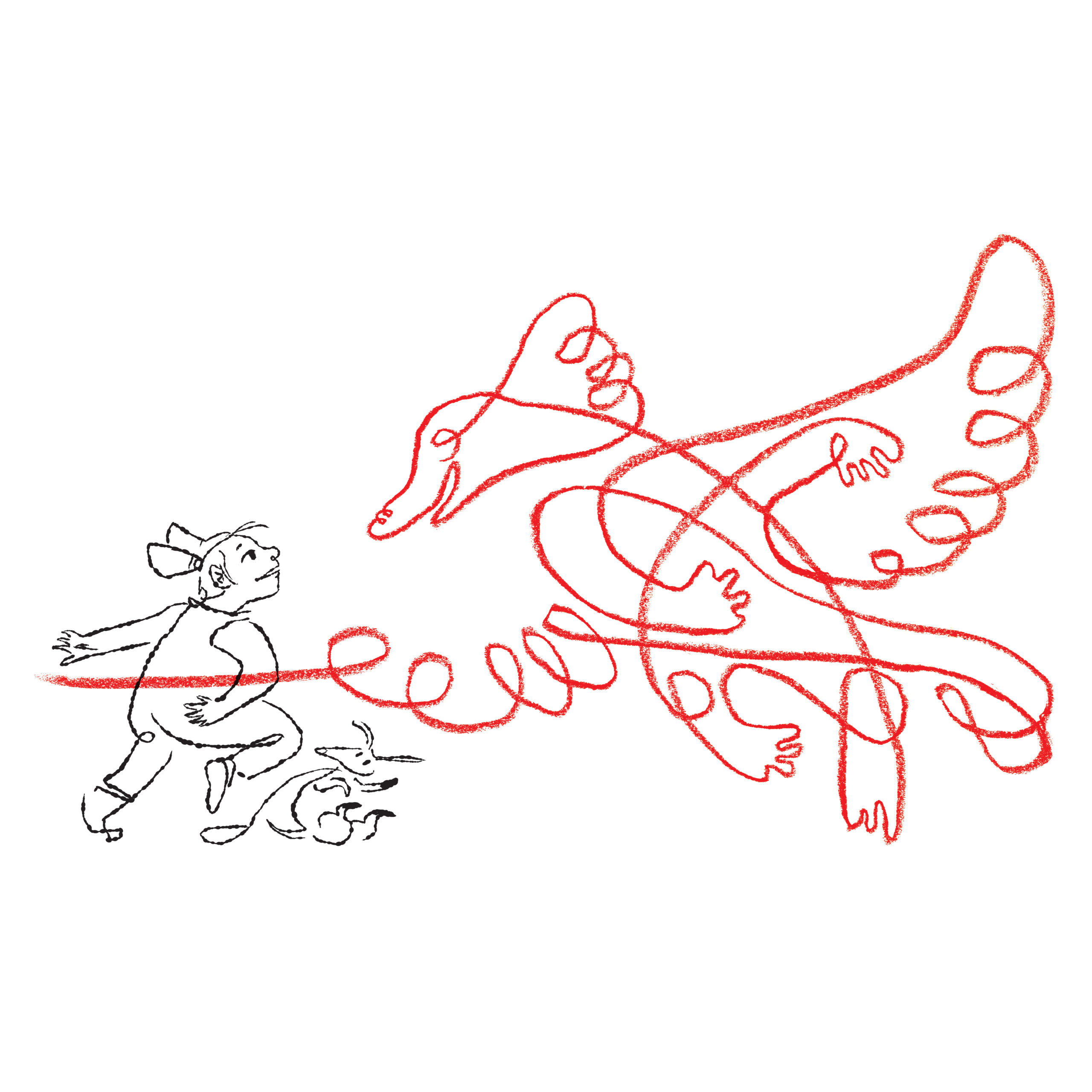
When you notice that something you made – a gesture, a mark, a sound, a sentence – feels alive and important and very much yours… that’s where art begins. Like a dragon that suddenly emerged, ready to… what? To fly? Roar? Curl up around you?
Whatever it is, it’s your adventure.
I wrote this book a few years ago, remembering my childhood which was full of creative projects, and remembering my sister who went at them with wild abandon. She taught me something important with her loud music, her bold painting, her dancing and her wild ideas… that’s what I put in this book.
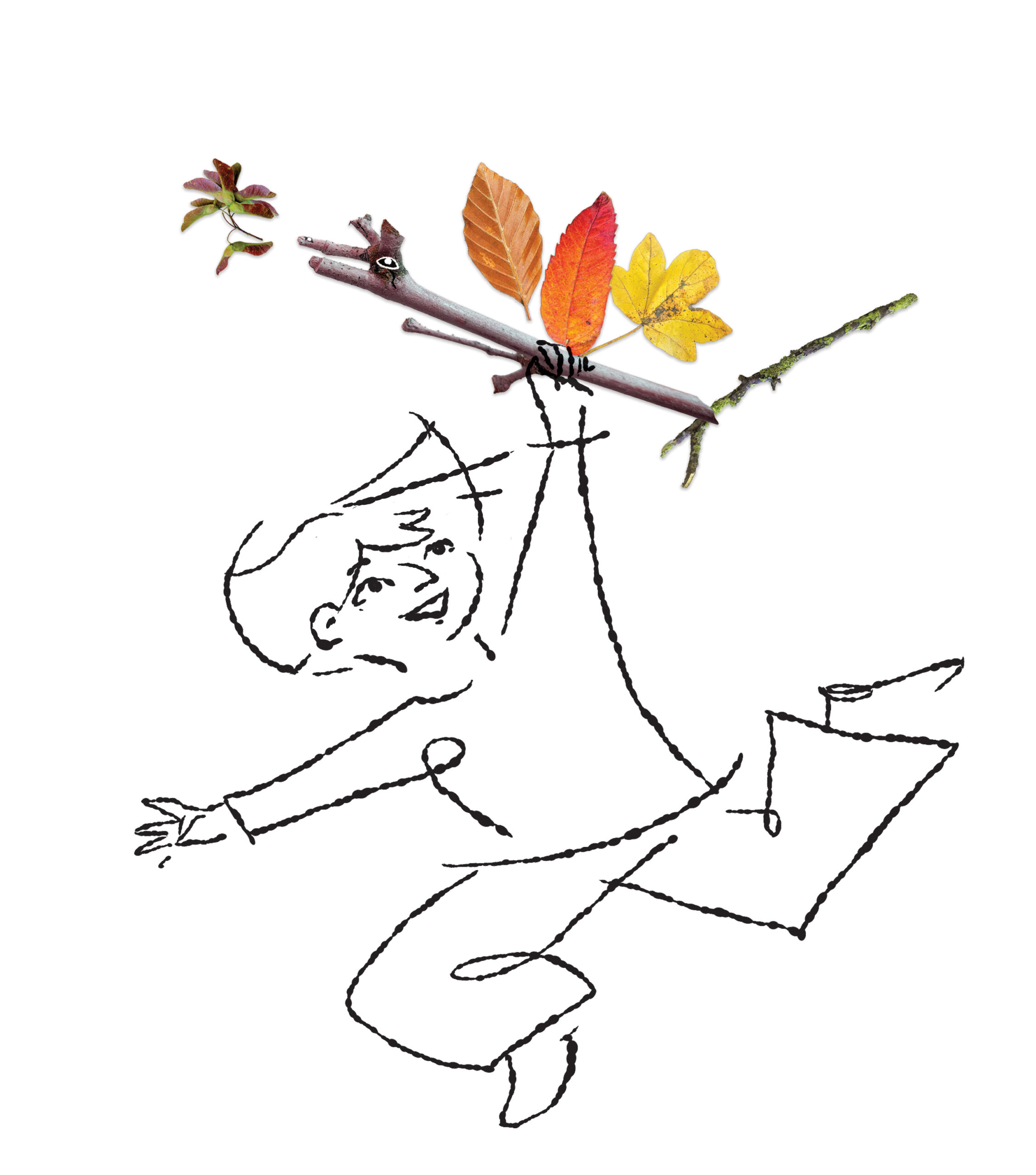
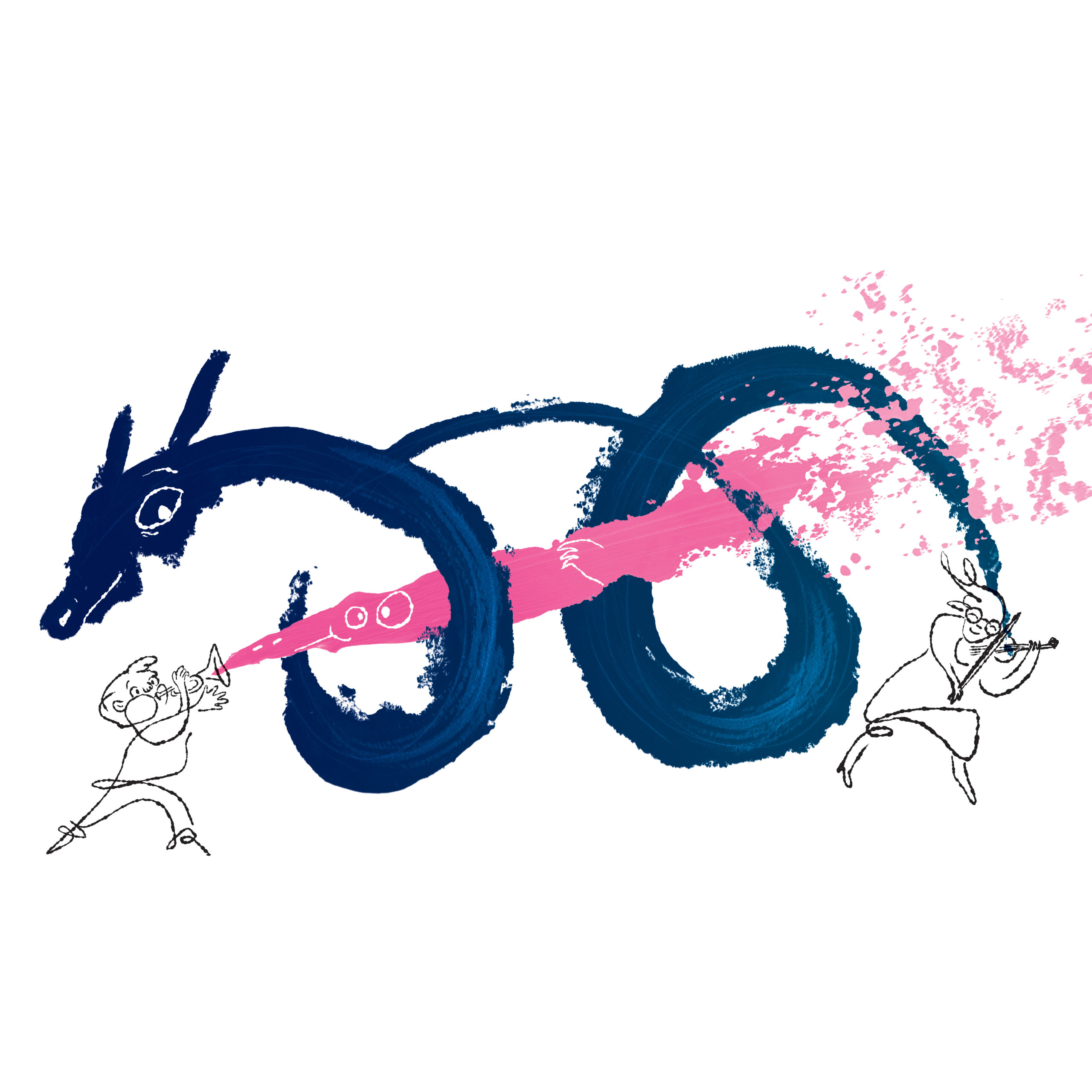
I illustrated it with techniques that I learned as a child – potato prints, crayon scribbles, paint that runs and paint that splatters… every dragon is an example of another way you can make your mark.
It’s a book you can read by yourself or out loud, enjoy my dragons, get inspired to make your own, use it to kick off a workshop or just a chat about the beginnings of art, and what art does, and what it is for, and what it means to you.
It’s out now! Go get it from your favourite bookshop!
(In the US, it’ll be out a little later from Candlewick books).
No AI was used in the making of this. AI doesn’t know what it means to be you. Make your own art. It’s better.
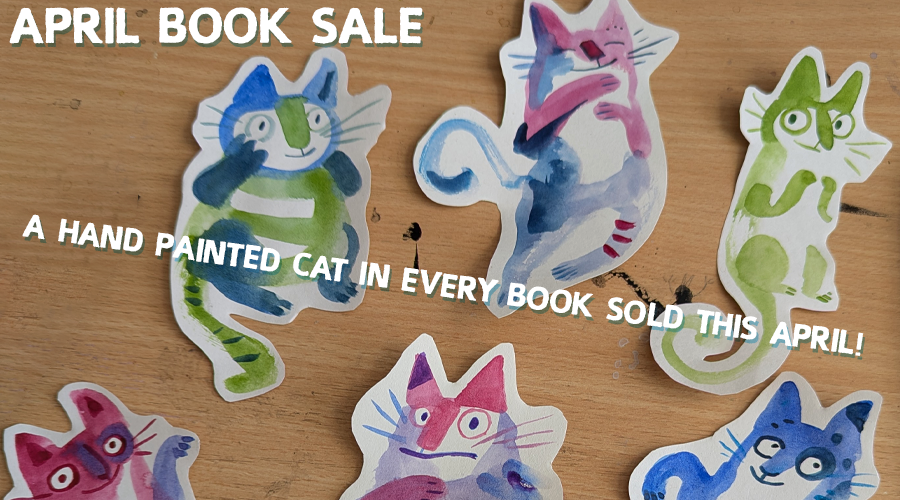
I am doing a book sale in my shop – signed copies of this and that.
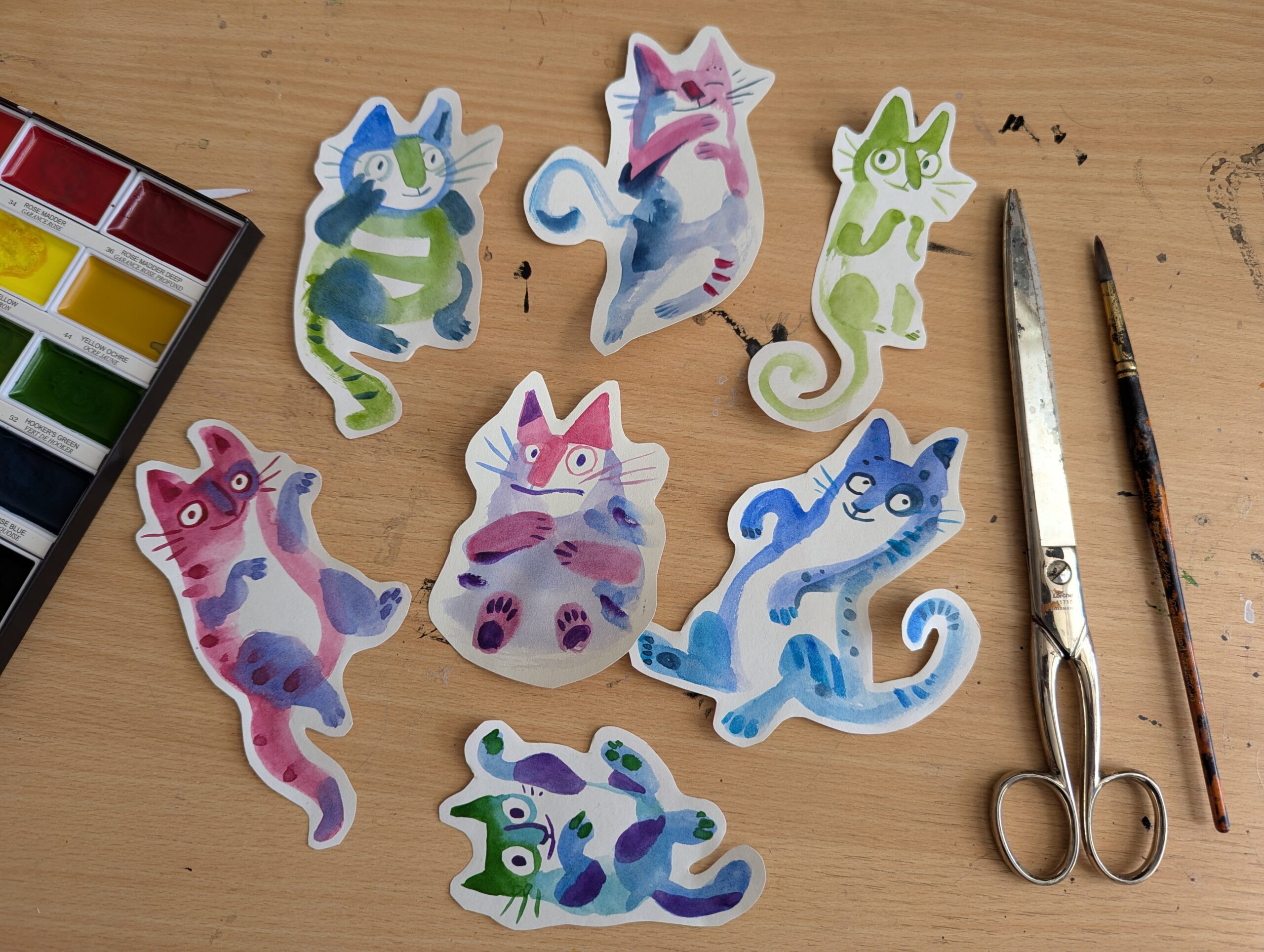
Today, I’m painting watercolour cats and cutting them out with my big paper scissors (they went missing in a house move and only just resurfaced, so I am very excited to be using them). I’ll tuck one of them into every book sold this month.
I’m having to raise a bit of money because I really need to replace my noise cancelling headphones (they are eight years old and more noise than cancelling). So if you’re buying a book, you’ll help me be less stressed out when making new books – and you’ll get a little surprise cat painted just for you, to frame or carry in your pocket or hide in your home to surprise yourself or use as a bookmark or give to a friend. AND you’ll get a signed book.
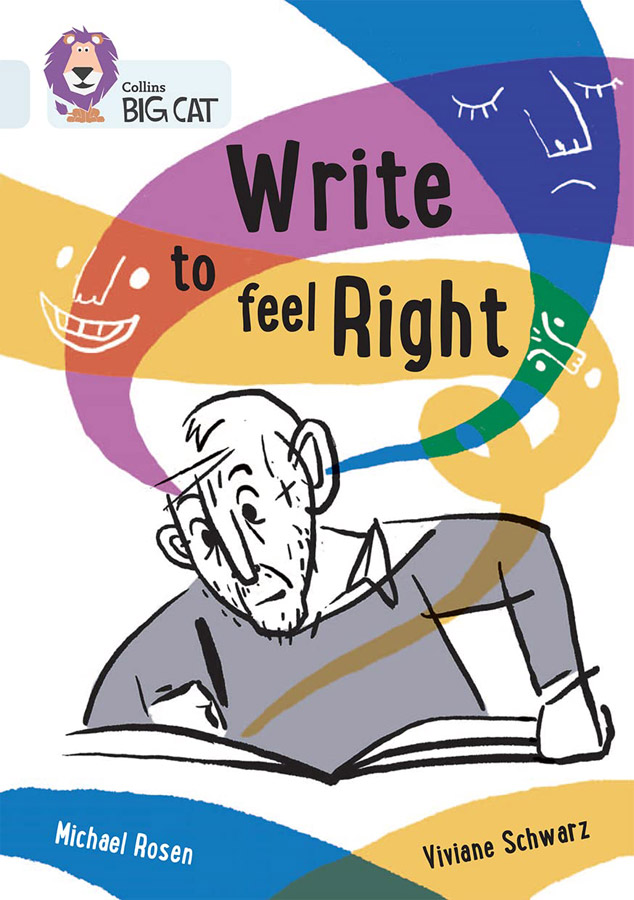
Michael Rosen wrote a slim, clear, encouraging guide for children to start writing about their emotions, and discover how that can help them to, well, feel right.
In his own words:
I wrote this book because I’ve found writing about my state of mind really helpful and fun at the same time. Sometimes this is because I’ve been troubled – devastated even, as when my son died. Other times I’ve wanted to celebrate and remember great times I’ve had. The help it’s given me comes from seeing myself reflected back at me. This helps me view myself with some degree of detachment, and this enables me to put myself into the company of others, other people who may have experienced this pain or joy too. Togetherness feels better than isolation. I wanted to share these ideas with young people because I know mental health is a big issue for many young people and I hope this book will help them.
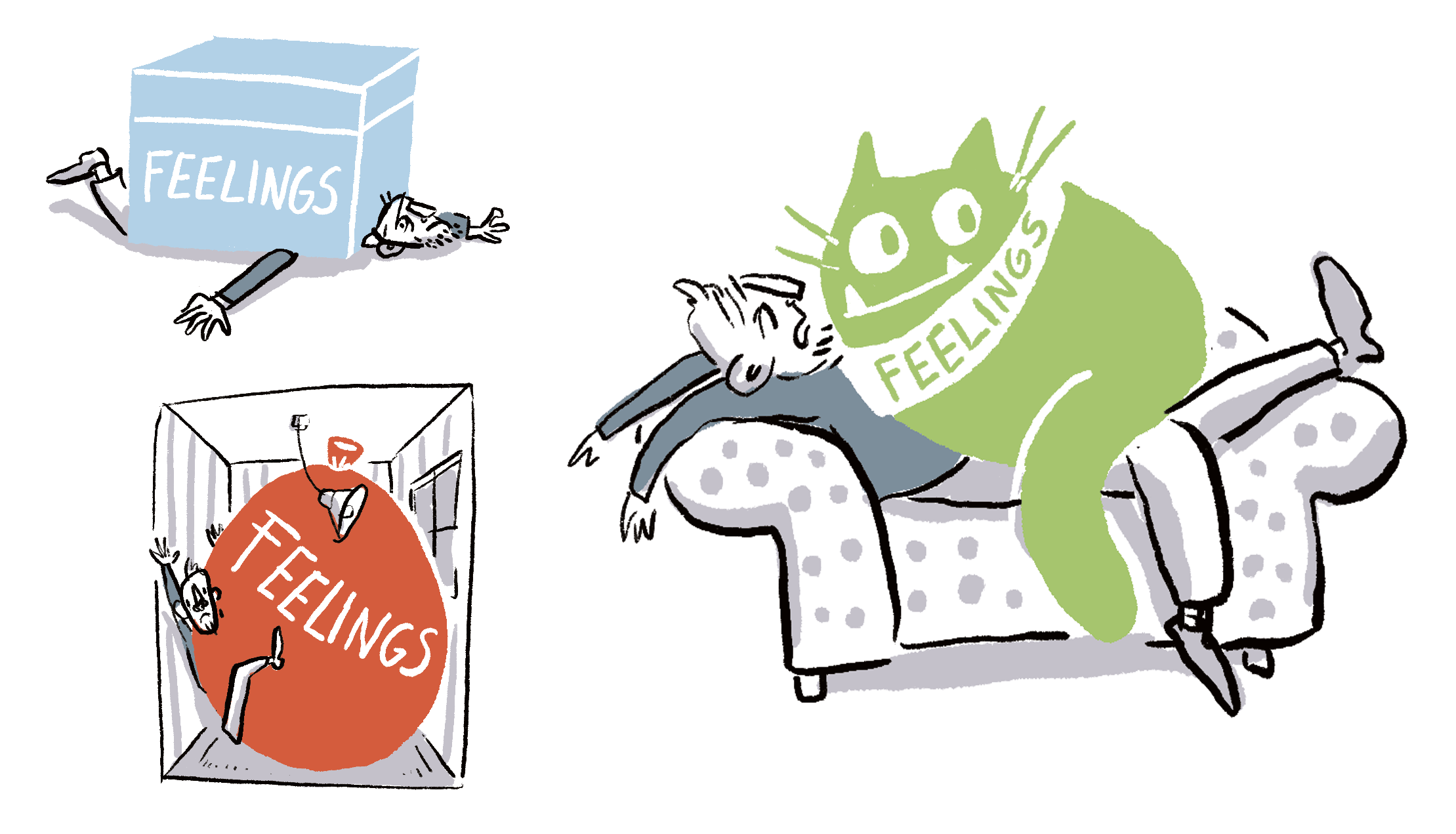
Feelings can be a lot.
I was very happy to illustrate it. I’ve worked with Michael Rosen for several a Finding my way of drawing him was enjoyable, and drawing him in all those different moods even more so.
Michael Rosen doing a reading. It’s a good thing to witness, and, he shows us here, a good thing to be doing, too.
There were many opportunities to use my favourite sorts of swirls and blobs to represent thoughts and emotions.
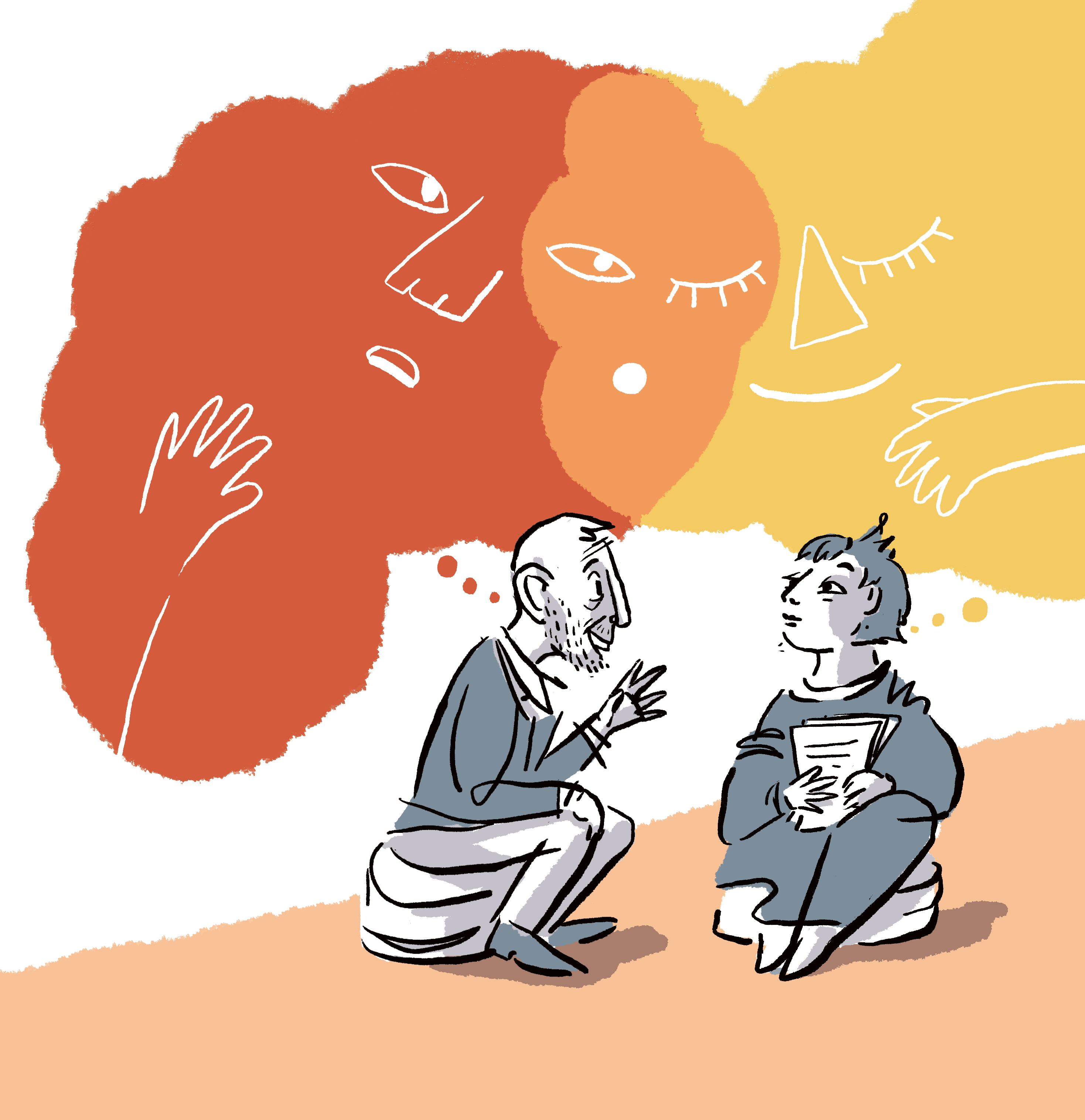
Writing about feelings can start a conversation. It can open up channels into different ways of thinking.
Most of all, I really think it’s a book that will actually be useful in classrooms, and beyond that – the advice is sound, and it reminded me to get back to listening to and writing down my feelings again.
Michael Rosen talks about THINKING in this book as well as FEELING – about perception, and planning, daydreaming, reasoning and remembering… it’s a lovely, methodical explanation of how it all comes together in writing.
Write to Feel Right is published by Harper Collins in their Collins BIG CAT imprint, available to order, and I think that it’s a very good one for parents to use with their children, and really for anyone with children in their life. Feelings can be difficult, but writing is an amazing tool for all of us.
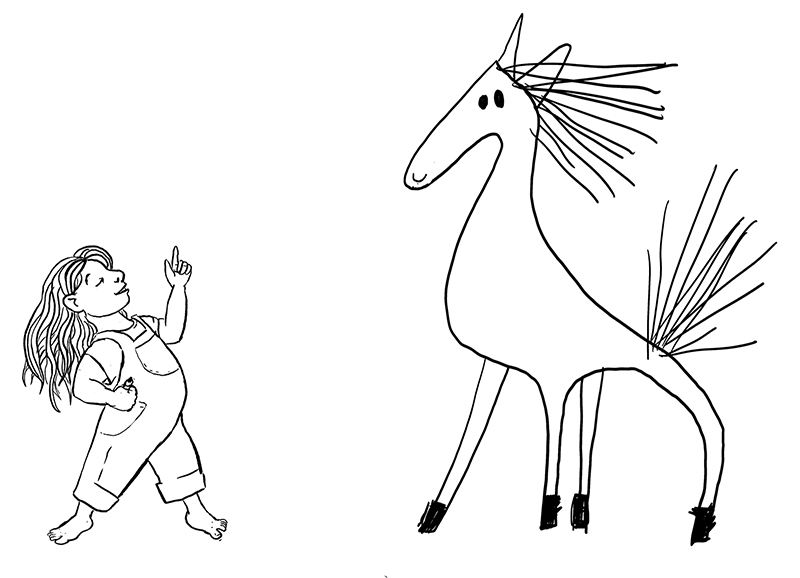
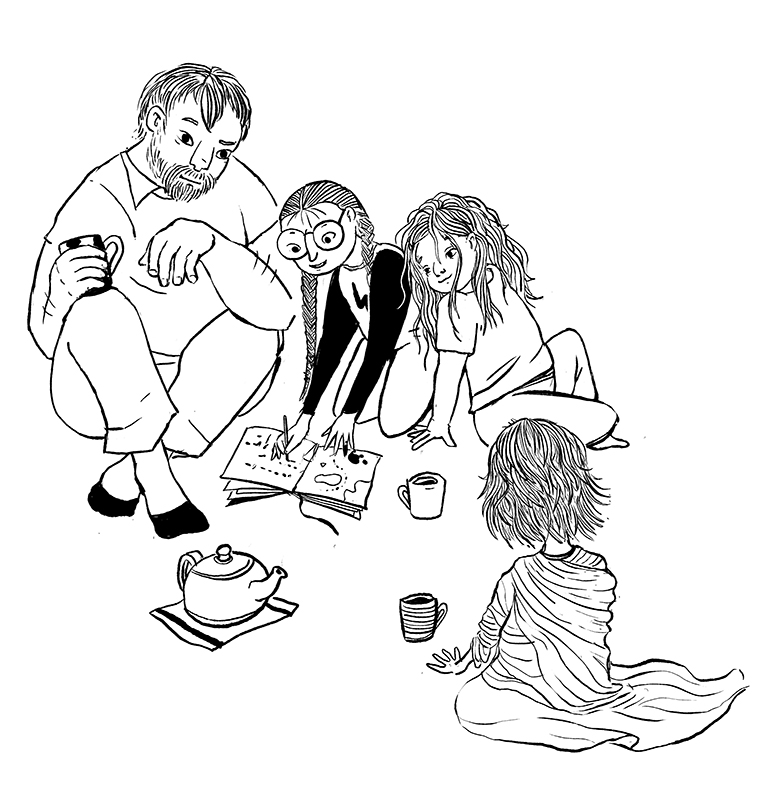
Here are some children. Here is a basket of colourful pencils.
Art is about to happen.
The children know exactly what to do with this big basket of colourful pencils: dig with both hands. Dig right to the bottom.
The rattle of pencils is the ritual that has to come before the concentrated frowning and the murmured incantations: This is a lion. This is a lion. This is a lion. This is a tree. This is a tree. This is a tree.
Have you ever used one of those pencils?
Did you think: it’s a wonder what a child’s imagination can do, I can’t draw a THING with this?
No one can. We all tried. Some of us thought it was our fault and stopped trying.
Those are fake pencils.
The reason these children are digging through them with so much energy is because they are looking for one that works. They know to go for the shortest nubbins at the bottom of the box. Ignore the long ones, no one else got anything out of them.
They are foraging, with great determination.
Imagine what that determination could do.
When a child makes art, it’s not a case of playing pretend. It’s not like playing brain surgery with a spoon and a pudding. It’s not like feeding a plastic doll. They are not playing artist. THEY ARE ACTUALLY MAKING ART.
They use what they are given. They scratch faint lines, they rub puddles of chalky water across dissolving printer paper with splayed brushes. They powder fat snakes of glue with scales of confetti and glitter.
What would happen if someone gave you a bowl of confetti and some glue and told you to make art?
You might refuse. (I would.)
Children are generally good-natured enough to at least give it a try. But even the most loving guardian and the children themselves may look at the result and find it hard to see if, in fact, somehow, art has happened.
You stick it on the fridge, and you can tell what it is and everything… but is it art?
Well, it’s creative.
“Creative” often means “Wow, I’m glad I didn’t make that”.
Would you ever wish you’d made something that a child made?
Yeah… this is definitely very creative.
Maybe one day, if those children keep being creative and try very hard, some of them might even become artists…
But – who cares if they may be artists one day? What’s the point in telling them they may be artists one day if they work hard? What’s that got to do with anything? Is this whole confetti business some sort of test? Are we trying to trick them into law school or something?
It simply doesn’t matter what they will be one day.
Art is not just for artists. It’s for humans. It’s not a privilege. It’s a way to think with your hands (or your feet or your voice or your whole body, depending on the art, but we started with children and a basket of colour pencils, so pictures are trying to happen right now).
Art lets you have a good look at your thoughts, and show them to the world if you want.
You don’t need a license to make marks. You just need something that makes marks.
The joy of making pictures is more than an act of imagination. It’s physical. Your gestures made visible and permanent, the marks you make, belong to you alone, like your own body. They come before communication, before expression: they are the basis of all those things.
Give them things that leave marks. Try them out yourself. Are they enjoyable to use? Can you get a range of different marks out of them? Are they the marks you expected? Do they surprise you?
In short, do you feel like you are making something – or do you just feel like you are using something up?
Keep trying out materials. You’ll know them when you find them.
You don’t need to buy whole sets of expensive tubes of paint – or sets of anything, or anything expensive. You don’t need many different colours. Every good piece of art material unlocks endless possibilities. By good I mean anything that readily creates or receives a mark, which may include beetroot juice or a particularly well-charred stick, and the lovely white rounded cards that are used to package tights. Do professional artists paint with their breakfast tea sometimes? Of course they do, if it’s nice and strong!
Some good art materials command respect: you must wear clothes that you don’t mind staining, and you must handle them carefully. A bottle of red ink could spoil a whole carpet.
You may be surprised how much respect children can show for a powerful substance like that. Being careful for a good reason is fun, and using something that requires your supervision is exciting and memorable.
Those children like to see you deal with important substances, you know.
Art materials often need some care. Brushes need to be washed and stored carefully. Maybe the children have pets, or toys that they care about. Can they look after those? Then they can look after their tools, if you teach them.
You can give them a load of fake colourful toy paints that don’t make a mess because they don’t actually leave any traces at all – or you can let them make art.
A real brush costs no more than a pack of toy ones. A box of decent watercolours costs more than a pound shop set – get one with fewer colours. Find some bright colours that mix well, and you’ll suddenly have a whole range. Or pick just one single colour, but one that leaves a mark. Get to know that colour. Ask that colour what it can do, and you will be surprised.
By all means and of course: check if the paints are toxic. If they eat paint, they aren’t ready for paint that must not be eaten. But don’t underestimate them as they learn. If they can learn to deal with boiling water, and learn to deal with cleaning products, they can learn to deal with art materials. You’ll be there to help them with the messier ones, and find ones that are safe enough as long as the area is covered against smears and splashes.
You may well find that as soon as they are actually making marks that are meaningful to them, the children won’t be anywhere near as messy as you fear because they won’t have to make up in dramatic performance and make-believe for what the material denies them in actual experience.
They will WANT to make something beautiful rather than just have a play-time with colourful sticks that are better for throwing than drawing with.
Maybe you don’t have a budget for art materials. Don’t forget about all the good stuff you can just use for free. If you have a pair of scissors and some paper glue, anything colourful in your paper recycling may be a collage picture waiting to happen. A felt-tip pen and some scrap paper is better than that whole basket of useless crayons.
One last thing: Don’t just hand everything over to the children. Why should they have all the fun and education? Make some art together. And I mean: each make their own piece. If the materials work, you probably won’t need to help them to make it look good any more. Of course you can also collaborate on things, that’s part of the fun. But above all, respect each other’s art: you make your thing, they make theirs. You will find that you can teach one another a lot.
It’s amazing what a child’s imagination can do – but don’t let them imagine that they can’t make art.
Make those fake pencils into a tiny fence for a herd of amazing beasts painted with tea stains and thumb prints, pink highlighters and ink.
Art is about to happen.
Don’t miss out.
This is a repost of an article I wrote some years ago.
A personal story about the importance of non-fiction books to a young child
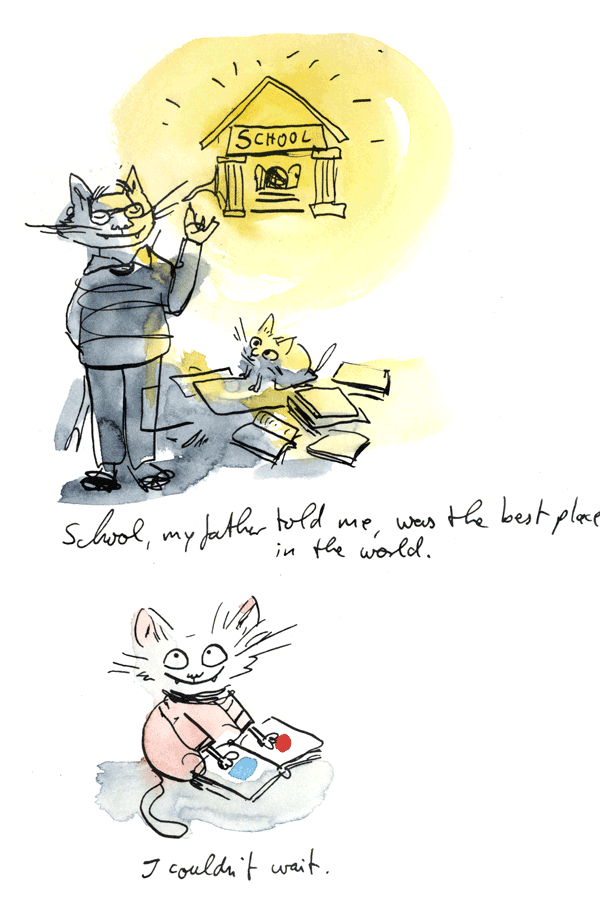
School, my father told me, was the best place in the world. It was where you learned about everything. My mother was a teacher then, and I envied all those children she went to see every day.
I couldn’t wait.
But I had to.
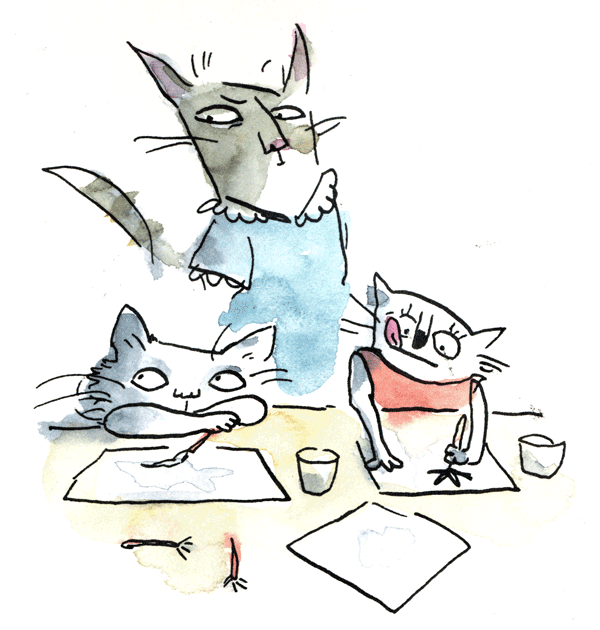
Kindergarten was a tiny place just across from the hospital where my father worked. To me, it seemed vast. I couldn’t reach the doorbell, and I never dared to play on the looming slides and swings. I didn’t enjoy painting with water on blotting paper and watching it dry and disappear. I was frightened by the nonsensical clapping songs and I detested any sort of entertainment, especially the magician we went to see twice a year for a treat.
Magic was a lie. The world was full of true wonders. I wanted to know them all, and invent new ones.
I wanted to be in school.
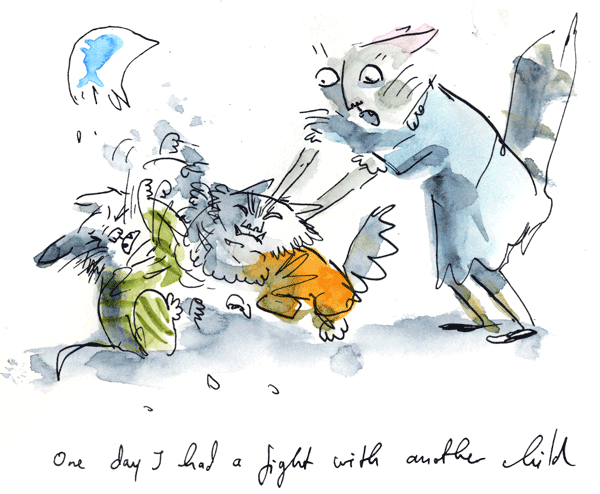
One day I had a fight with another child who insisted that whales breathed water, not air. That was the last straw. I’d already listened to her insisting that clouds were blue on a white sky, as in her drawings, because clouds were full of rain and the sky was empty, and that when the sky looked blue it was just covered in clouds.
We were separated and I had to sit at a table across the room with a child who didn’t talk.
“Did you know that whales breathe air?” I asked her. “They do.” She shook her head quietly. “Do you want to know more about whales?” I asked. She nodded. “I will tell you tomorrow,” I said.
At home, I asked my mother about whales, and I concentrated hard to learn it all. My mother had a song she liked to sing about a whale called Jonathan who swims in the ice-cold Northern sea, and she told me that whales eat krill, which is all the tiniest things in the sea.
The next day I couldn’t wait to see my new friend.
“Welcome to school”, I said. “Whales are not really fish. They live in the ice-cold northern sea and they eat krill.”
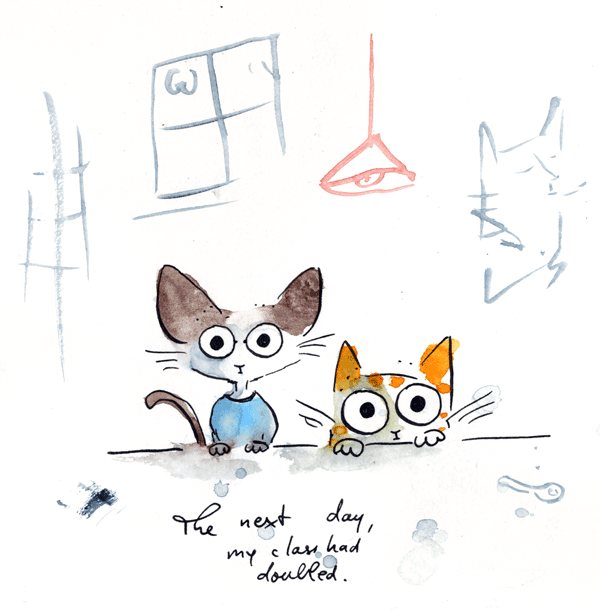
The next day, my class had doubled. Two silent children stared at me with awe, and all I had prepared was the subject of carrots. All I had learned about carrots was that you can eat them in a way that leaves a weird spiny core, and I had no idea why that was the case.
“This was a short lesson, “ I said after my demonstration, “but tomorrow I will teach you about time.”
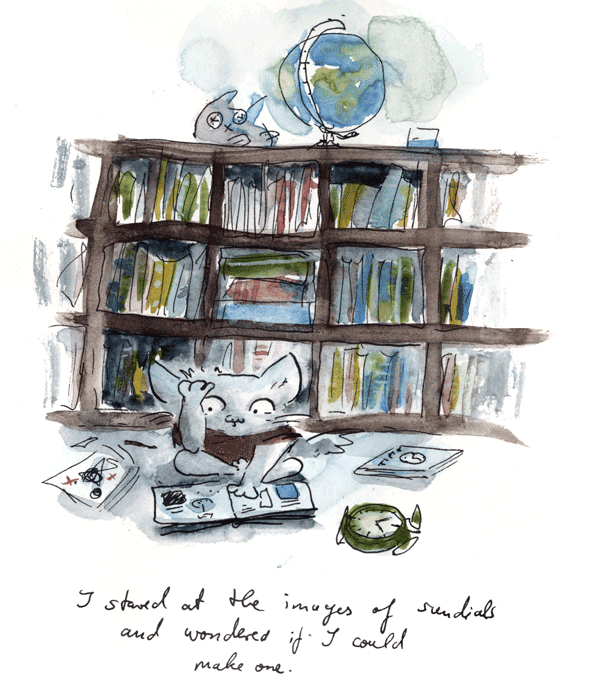
At home, I went straight to the bookshelf. There was a whole row of non-fiction books, heavily illustrated, including “The How and Why Wonder Book of Time”. Time seemed an easier subject than for example dinosaurs, because there were many dinosaurs but only one time.
I stared at the images of sundials and wondered if I could make one. I deciphered the words as well as I could.
I had already learned to read by badgering everyone constantly to tell me what every bit of writing anywhere said, and once I realised that the word on the sugar packet was SUGAR I was off, reading first all the labels, then all the signs and finally all the books in my world.
I wasn’t so good at talking yet. Sentences came out of my mouth in the wrong order, some sounds weren’t quite right and I wasn’t ever sure what other people actually knew about or what I had only dreamed.
But I tried my best.
“Welcome to school,” I said. “If you fall into a black hole in outer space, you keep falling forever. But you won’t, because you can’t fall upwards, that would be flying. Maybe we can make a clock, but I don’t know how. I’m sorry. I will find out more.”
A short time later, we were told that we’d go to see the magician again. I started screaming and didn’t stop until they’d taken me out of kindergarten forever.
From then on, I stayed home and read and drew and learned. I was happy that I didn’t need to waste any more time with clapping and water painting, and I was looking forward to starting school.
It turned out that school meant sitting still and learning one letter at a time.
The first day we all went “i”, which was the sound one might make sliding down a slide or stepping in a puddle, as the pictures illustrated. I leafed through the book and wondered what it was trying to teach me. It was all complete nonsense. There was no information at all, the pictures were lovely but was this really the only book we would be reading all year?
Every day I went and wondered what was happening to me. There was a classroom library, but I wasn’t allowed to touch the books unless it was reading time, and reading time only happened when it rained at recess. Asking questions was bad. I drew animals and rockets all around the edges of my exercise book, telling myself there would be an end to every lesson. The first weekend, I hid under a chair at home and told everyone I lived there now. Soon after, I started having stomach aches and nightmares.
I still dream about school and wake up sick.
I’d forgotten about all of this until last week when I went to visit a friend who has a two year old daughter. At bedtime, there was a huge stack of story books to choose from, several of them written by me.
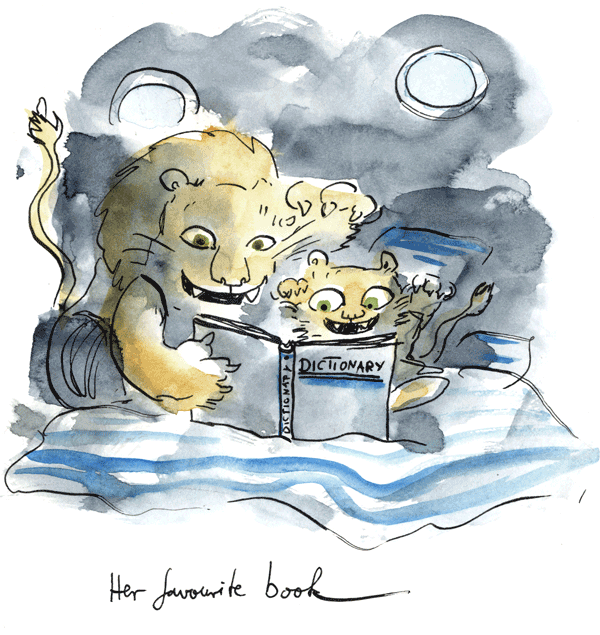
She chose an illustrated French dictionary instead. “That’s her favourite”, my friend said.
I watched them read together.
My friend read out the words, asked questions and explained. Her daughter nodded to herself, whispering the names of animals, making claws and growls of lions not as make-believe but to remember: lion. It’s striking how grown-up tiny children look when they are learning something.
It’s just as striking as the child-like joy of an adult who just worked something out… because in this, the most profound and life-important enjoyment, we remain the same.
We all want to work things out.
That child I was fighting in Kindergarten was reasoning out the nature of clouds as much as I was, and she really cared about whales.
If the adults had taken notice and picked a few books off the shelf for us to look through together, our tiny self-teaching school would have grown and grown.
They let us paint with water to save on paper when they should have let us mix colours.
We could have made a sundial with the adults, right outside, right then, if they’d just asked us what we were doing instead of laughing at our seriousness.
We sang clapping songs every day to keep in line when we could have sung about whales in the ice-cold northern ocean.
And school…
My dad was right. School should be the best place in the world.
It wasn’t. There was no best place. But there were books.
I love my job of writing and illustrating stories for children, but my first, true and most profound love will always be non-fiction books. If you write them, thank you.
If you read them: welcome to school.
Tomorrow we will build whatever you want, I hope.
This is a repost of an article I first wrote in 2016.
This month, I got a list of questions from a school in Barrow-in-Furness.
Are you writing any more books?
When did you become an artist?
Where do you get your book ideas from?
How do you draw really good pictures?
What materials do you use for your illustrations?
Here are my answers.
Yes! I am writing more books all the time. Right now, I am working on a longer book about a little girl who moves house, and the strange things she finds in the new place.
I have always been an artist, just like you!
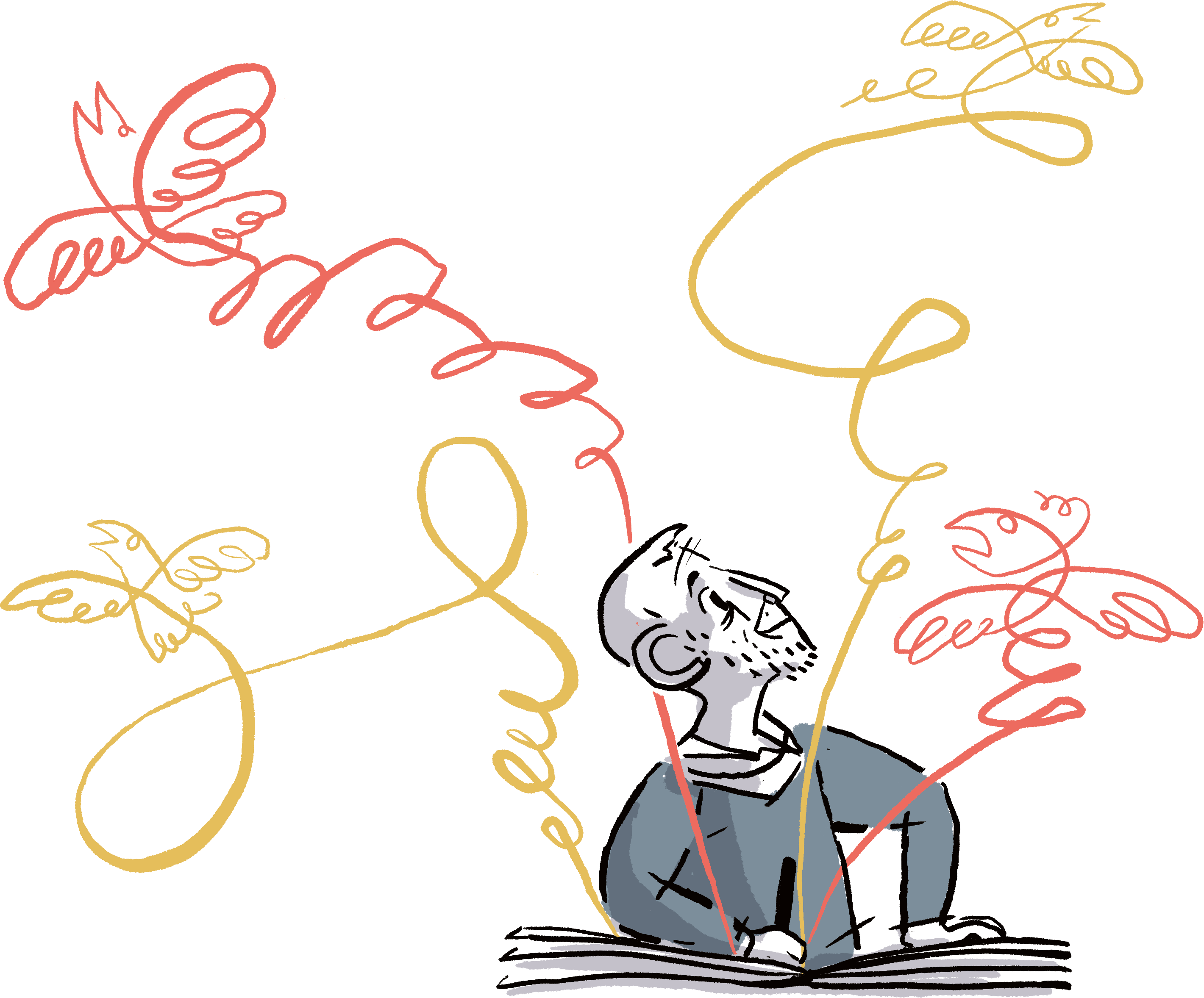
There are book ideas everywhere. They just come to you like birds come to a tree if you let them. Try imagining that your feet are roots that go far down into a big hill of everything you ever thought about, and make yourself tall on that hill, and spread out your arms and say: I want to write a book. Then see if an idea lands on you. It works for me! Or maybe you prefer digging down into the hill for ideas that live there, like moles and secret treasure. That also works.
To draw a really good picture, draw a picture and look at it to find what’s really good about it. Then draw more pictures, and over time it will get easier to see how good they are.
For my illustrations, I use everything that makes marks that I enjoy. My favourite material is ink, but I also love finding colours that I want to use by trying out all the crayons and paints that I can find. Sometimes I even make my own. Maybe you can find out about that as a project – there are many ways of making colourful inks and paints!
Feel free to send me questions – I will usually answer them (if I am TERRIBLY BUSY it may take some time).